
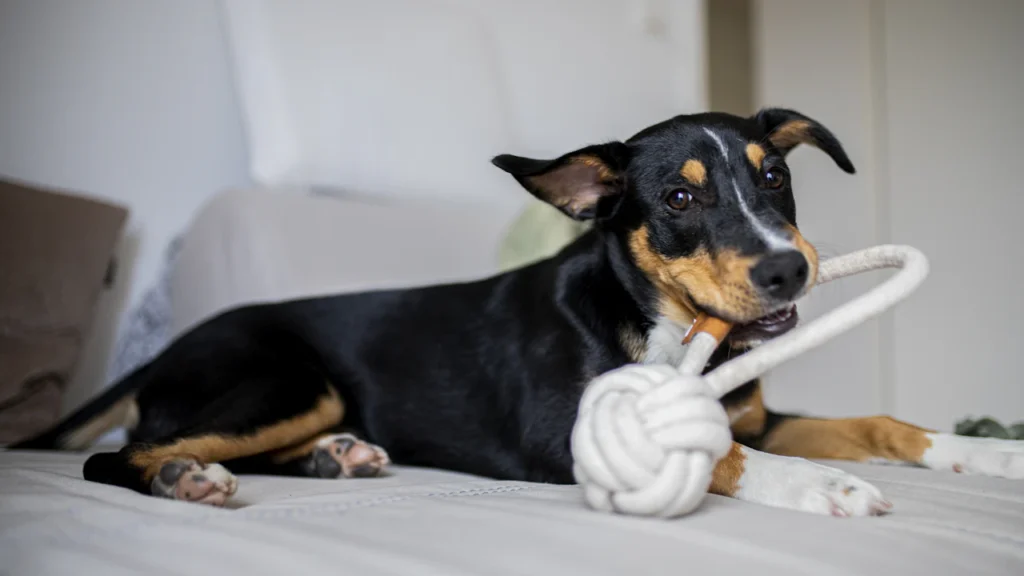
Puppy biting is a normal part of early development, but sharp teeth can make play uncomfortable. Puppies explore the world with their mouths, practise social skills, and often become mouthier when they are excited, tired, or teething. The goal is not to frighten a puppy out of biting. Instead, teach them what they can chew and how to interact gently.
This practical, reward-based plan can help you respond consistently while keeping people and your puppy safe.
Why Do Puppies Bite So Much?
Young puppies may mouth hands, sleeves, ankles, and furniture for several reasons:
- Exploration: Puppies use their mouths to investigate new objects.
- Play: They may try the same rough play that worked with littermates.
- Teething: Chewing can help soothe tender gums as adult teeth develop.
- Overexcitement or tiredness: Busy play and too little rest can make it harder for a puppy to settle.
- Attention: Chasing, shouting, or pushing a puppy away can accidentally turn biting into an exciting game.
Look at what happens just before the biting starts. That pattern can help you choose the right response.
1. Redirect Biting to a Suitable Toy
Keep a few puppy-safe chew toys within reach in the rooms where you play. When your puppy aims for your fingers or clothing, calmly offer a toy instead. Move it gently to make the toy interesting, and praise your puppy when they bite the toy.
Choose toys designed for your puppy’s size and chewing style. Check them regularly for damage, and remove pieces that could be swallowed. Avoid items that are so hard they could damage teeth; your veterinarian can help you choose suitable chews.
2. Make Play Calm and Consistent
Use toys rather than hands for games such as tug or fetch. Keep play sessions short, pause regularly, and reward moments when your puppy keeps their teeth on the toy. Everyone in the household should follow the same rule: skin and clothing are not chew toys.
If your puppy grabs a sleeve, avoid waving your arms or running away, which can make the game more exciting. Stop moving, calmly disengage, and offer an appropriate toy when your puppy is ready.
3. Pause Attention When Teeth Touch Skin
If redirection does not work and your puppy continues to bite, briefly end the interaction. Stand up or step behind a baby gate for a short, calm pause. Resume only when your puppy has settled enough to interact safely.
Keep the pause brief and predictable. Do not hit, muzzle, pin down, yell at, or hold the puppy’s mouth shut. Punishment can increase fear and may make biting worse. The lesson is simple: gentle play continues, while rough biting makes the fun pause.
4. Check Whether Your Puppy Needs Rest
Some puppies become especially nippy late in the day or after lots of visitors, training, and play. Offer a quiet, comfortable resting area and a safe chew. Puppies need substantial sleep, though the exact amount varies with age and individual needs.
Build a routine that alternates toilet breaks, meals, short training sessions, play, and rest. If biting reliably increases when your puppy is overstimulated, shorten the activity and give them a chance to settle.
5. Reward the Behaviors You Want
Notice and reward calm choices throughout the day. Offer praise or a small, appropriate treat when your puppy sits to greet you, chews their own toy, relaxes on a mat, or approaches without grabbing your hands. Practise easy cues such as “sit” in short sessions and reward success promptly.
Keep treats small and suitable for puppies, and account for them in the daily food allowance. Training should be short, positive, and adapted to your puppy’s attention span.
6. Help Children Interact Safely
Always actively supervise interactions between puppies and children. Teach children to keep hands away from a puppy’s face, avoid grabbing toys or food, and call an adult if play becomes too rough. Give the puppy a child-free resting space, and never leave a young child alone with a dog.
If your puppy is guarding objects, freezing, growling, or showing other signs of distress, do not force contact or take items by hand. Separate everyone calmly and seek qualified help.
When Should You Get Professional Help?
Playful puppy mouthing is common, but not every biting incident is ordinary play. Contact your veterinarian if the behavior starts suddenly, appears linked to pain, or is accompanied by other changes in health or behavior. Seek a qualified, reward-based trainer or veterinary behavior professional if biting is intense, repeatedly breaks skin, involves stiff body posture or guarding, or is getting worse despite consistent management.
If a bite causes a significant wound, seek appropriate medical care. Do not rely on an online article to assess an injury.
A Simple Daily Plan for Puppy Biting
- Start play with a suitable toy, not bare hands.
- Reward calm behavior and toy chewing throughout the day.
- Pause play briefly if teeth touch skin and redirection fails.
- Provide regular rest and a quiet, safe space.
- Make sure every family member follows the same approach.
- Track common triggers so you can adjust play and rest times.
Build Better Habits One Interaction at a Time
Learning bite inhibition takes repetition and patience. Keep your response calm, redirect to suitable toys, reward gentle choices, and protect your puppy’s need for rest. Progress is rarely perfectly linear, so focus on consistent improvement rather than expecting biting to disappear overnight.
For more practical guidance, explore our puppy help resources, dog training guides, and dog behavior articles.
For additional guidance, read the American Kennel Club guide to stopping puppy biting and the American Veterinary Society of Animal Behavior position statements on humane, reward-based training.
This article is for general educational purposes and is not a substitute for individualized veterinary or behavior advice.