
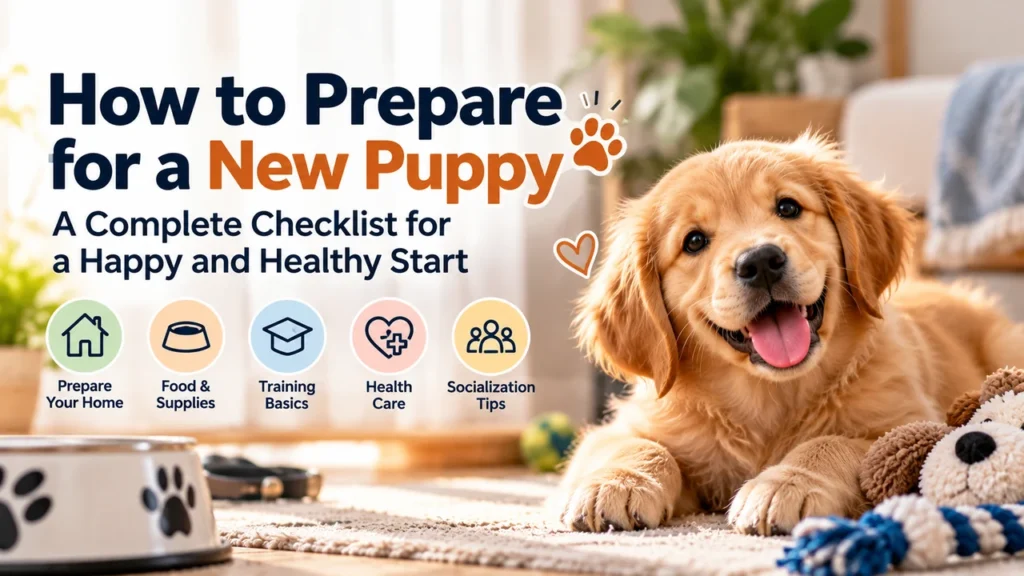
Bringing a new puppy home is exciting, but preparing for your puppy’s arrival takes more than choosing a name and buying a bed. You’ll need a safe space, the right supplies, a feeding routine, and a plan for early training.
This new puppy checklist will help you prepare your home and understand the essentials your puppy needs during the first few days. Whether you are a first-time dog owner or welcoming another dog into your family, a little preparation can make the transition smoother for everyone.
1. Puppy-Proof Your Home
Before your puppy arrives, look at your home from a puppy’s point of view. Young dogs explore with their mouths and may chew, swallow, or knock over things that seem harmless.
- Keep electrical cords and chargers out of reach.
- Store cleaning products, medicines, and chemicals securely.
- Remove small objects that could be swallowed.
- Keep human food and rubbish bins inaccessible.
- Check that houseplants are safe for dogs.
- Block access to stairs or rooms where your puppy cannot be supervised.
- Prepare a quiet area where your puppy can rest.
Baby gates and a suitable playpen can help you manage your puppy’s environment while they learn household rules.
2. Buy Essential Puppy Supplies
You do not need to buy every dog product available. Start with the basics and add other items as you understand your puppy’s needs.
- Age-appropriate puppy food
- Food and water bowls
- A comfortable bed
- A correctly sized crate or puppy playpen, if suitable
- A well-fitted collar or harness and a lightweight leash
- An identification tag
- Safe chew toys and puppy training treats
- Dog-safe cleaning supplies
- A brush suitable for your puppy’s coat
- Waste bags
- A secure pet carrier or suitable car restraint
Ask the breeder, rescue organisation, or previous caregiver what food your puppy has been eating. If you plan to change the diet, ask your veterinarian how to transition safely.
3. Prepare a Feeding Routine
Puppies need a consistent feeding routine that suits their age, size, health, and individual needs. Follow the food manufacturer’s age-appropriate guidance and your veterinarian’s recommendations.
Measure meals rather than leaving unlimited food available unless your veterinarian advises otherwise. Keep fresh drinking water accessible, and record feeding times if you are still learning your puppy’s habits.
Avoid giving table scraps or introducing lots of unfamiliar treats at once. Some human foods are unsafe for dogs, so check with a reliable veterinary source before sharing food.
4. Create a Puppy Potty Training Schedule
Potty training is easier to manage when everyone in the household follows the same routine. Young puppies often need to toilet after waking up, eating, drinking, playing, and before bedtime.
- Take your puppy to the designated toilet area after waking.
- Offer another break after meals and active play.
- Take your puppy out regularly while they are awake.
- Praise and reward them immediately after they toilet in the correct place.
- Supervise closely indoors and watch for sniffing, circling, or restlessness.
- Clean accidents thoroughly with an appropriate pet-safe cleaner.
The right frequency depends on your puppy’s age and individual needs. Accidents are a normal part of learning, so avoid punishment. If your puppy suddenly starts having frequent accidents or shows signs of discomfort, contact your veterinarian.
5. Start Basic Puppy Training Early
You can begin teaching simple skills as soon as your puppy settles in. Keep sessions short, positive, and appropriate for their age.
Teach your puppy their name
Say your puppy’s name in a cheerful voice and reward them when they look at you.
Practise coming when called
Begin indoors in a quiet space. Call your puppy from a short distance and reward them when they come.
Reward calm behaviour
Give praise or a small suitable treat when your puppy settles quietly or chooses an appropriate toy.
Introduce handling gently
Gradually help your puppy become comfortable with having their paws, ears, and body touched. Stop if they appear frightened and progress at their pace.
Teach appropriate chewing
Redirect chewing towards safe toys rather than hands, shoes, or furniture.
Reward-based training helps make learning a positive experience. For socialisation, ask your veterinarian how to introduce new people, sounds, surfaces, and environments safely while your puppy’s vaccinations are still in progress.
6. Arrange Veterinary Care
Find a veterinarian before bringing your puppy home and arrange an initial health appointment. Bring any vaccination, deworming, microchip, medication, or previous health records you receive.
Ask your veterinarian about vaccination schedules, parasite prevention, microchipping, nutrition and healthy growth, dental care, safe exercise, and spaying or neutering where appropriate. Do not rely on a generic online schedule for medical decisions. Your puppy’s care plan should reflect their age, health, location, and exposure risks.
7. Help Your Puppy Settle In
A new home can feel overwhelming because everything smells, sounds, and looks unfamiliar. Keep the first few days calm and predictable.
Give your puppy a comfortable sleeping area, allow time for rest, and introduce household members gradually. Supervise interactions with children and other pets. Never leave a young child alone with a dog.
Practise brief, positive periods of independence as your puppy settles, rather than expecting them to stay alone for long periods immediately. If your puppy cries at night, check their toilet needs, comfort, and safety before deciding how to adjust the bedtime routine.
8. Track Progress During the First Week
A simple puppy care tracker can help you notice patterns and keep the household organised. Record meal times and appetite, toilet breaks and accidents, sleep and nap times, training sessions, new experiences, veterinary instructions, and questions to ask at the next appointment.
Use these notes to adjust the routine as your puppy grows. Every puppy develops at a different pace, so focus on consistent progress rather than expecting perfect behaviour straight away.
New Puppy Checklist: Final Review
- Puppy-proofed the main living areas
- Prepared food, water, bedding, and safe toys
- Chosen a toilet area
- Planned regular feeding and toilet breaks
- Found a veterinarian
- Collected any available health records
- Agreed on household rules with family members
- Set aside time for supervision, training, and rest
Give Your Puppy a Confident Start
Preparing for a new puppy is easier when you break the process into manageable steps. A safe home, a predictable routine, reward-based training, and appropriate veterinary care can help your puppy adjust and build healthy habits.
Save this new puppy checklist and revisit it during your first week together. For more practical advice, explore our puppy help, dog training, dog behaviour, and dog care resources.
For more puppy-care guidance, consult the American Veterinary Medical Association pet-owner resources and ask your veterinarian about recommendations specific to your puppy.
This article provides general educational information and is not a substitute for individual veterinary advice.