
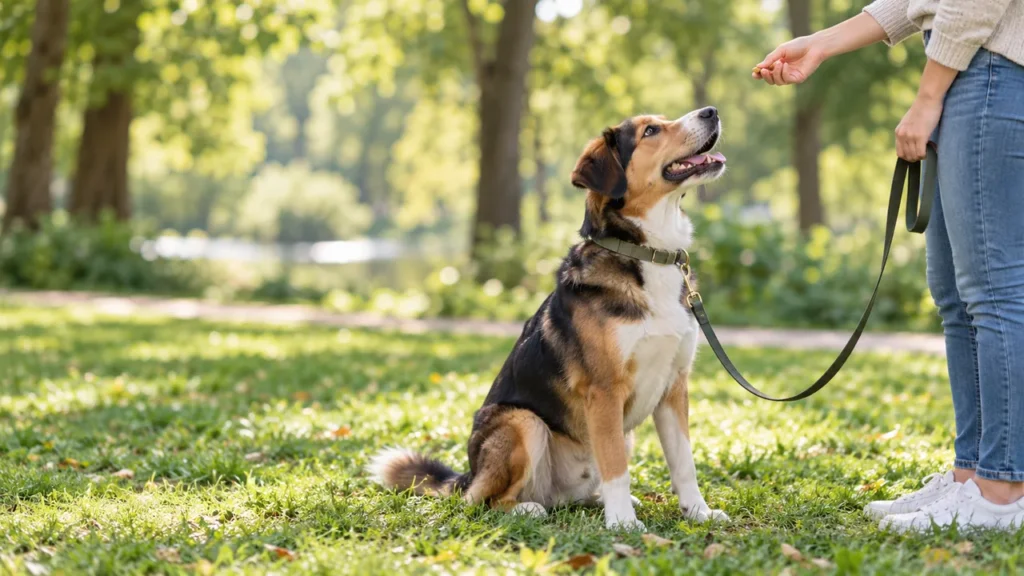
Dog training is part of ordinary life: greetings, walks, settling at home and coming when called are all skills dogs learn through experience. Reward-based training gives your dog useful information by making a desired behavior worthwhile. The American Veterinary Society of Animal Behavior recommends reward-based methods for teaching dogs and addressing behavior concerns. See its humane dog training position statement.
1. Pick one observable behavior
Make the goal specific. “Be good” is hard to practice; “sit while I clip the leash” gives you and your dog a clear moment to notice. Start in a quiet place where your dog can pay attention.
2. Choose a reward your dog values
Rewards can include a small piece of the dog’s regular food, a toy, play, sniffing or friendly attention. What works can change with the setting and the individual dog. If food rewards are appropriate for your dog, use small pieces and account for treats in their daily food plan.
3. Mark the moment
Use a short word such as “yes” or a clicker at the moment the behavior happens, then give the reward. The marker helps connect the action with its consequence. Practice first with an easy behavior so your timing gets comfortable.
4. Keep practice short and successful
A few repetitions can be enough. End while your dog is still engaged, offer a break, and try again later. If your dog is distracted, tired or worried, make the task easier or change the environment instead of repeating the cue louder.
5. Build difficulty one step at a time
Dogs do not automatically understand that a skill practiced in the kitchen also applies at the park. Add distractions, distance or duration gradually, changing one element at a time. Return to an easier version when the setting changes.
6. Reinforce the behavior you want to see
Look for useful moments in daily life. Reward four paws on the floor during greetings, checking in on a walk, or settling on a mat. Management also matters: use gates, a leash or a quieter space to prevent rehearsing behavior while you teach a replacement skill.
When to get support
Fear, aggression, separation distress or a sudden behavior change can need an individual assessment. Speak with your veterinarian to rule out health contributors and seek a qualified, reward-based behavior professional. Keep people and animals safe while you arrange help; avoid advice that relies on frightening or hurting the dog.
Consistency means making the next helpful choice easy to understand, not demanding perfection. Keep notes on what worked and make the next practice a little clearer.
This article is general education, not an individualized training or veterinary plan.