
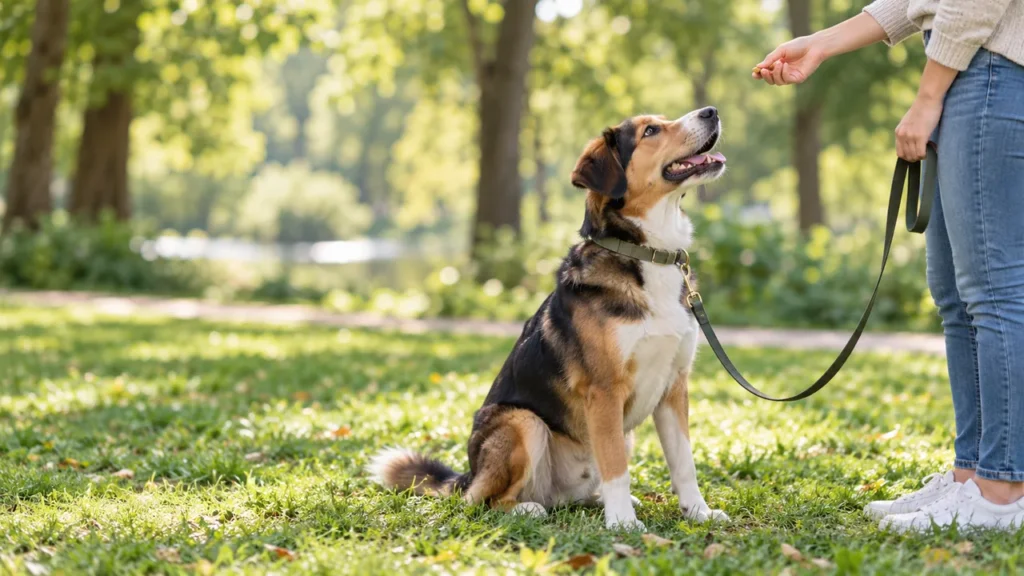
Loose-leash walking is a skill that takes practice. Start in a quiet space where your dog can focus, use a comfortable harness or collar fitted appropriately, and bring small rewards. The goal is a slack leash and a dog who can check in with you—not a perfect heel for every step.
Reward the position you want
When your dog is near you and the leash is loose, mark the moment with a word such as ‘yes’ and reward beside your leg. Take a few steps, then reward again. If the leash tightens, pause or gently change direction without jerking; resume when your dog turns back and the leash softens.
Increase difficulty gradually
Practice in short sessions, then add mild distractions at a distance. If your dog pulls toward a person or dog, create more space and reward attention before moving closer. Avoid practicing greetings on a tight leash if either dog looks uncomfortable.
Our reward-based training basics explain timing and reinforcement. The AVSAB training statements recommend reward-based methods. For safe walk planning in hot weather, check the AVMA warm-weather safety tips.
Choose quiet routes while the skill is new and celebrate small improvements. If walks involve fear, lunging, or aggression, consult your veterinarian and a qualified behavior professional.
Use equipment safely and seek individualized help for serious behavior concerns.