Enrichment gives dogs safe opportunities to sniff, explore, chew, play and solve simple problems. It does not have to mean buying a stack of new toys. A few minutes of choice and discovery can make an ordinary day more interesting. The ASPCA describes food puzzles, scent games and other activities as ways to support dogs’ natural behaviors; see its canine DIY enrichment ideas.
1. Turn part of a meal into a search game
Scatter a portion of your dog’s regular kibble across a clean, easy-to-check area or hide a few pieces in simple, visible locations. Start easy so your dog can succeed. Keep the activity separate from children’s toys and other pets’ food.
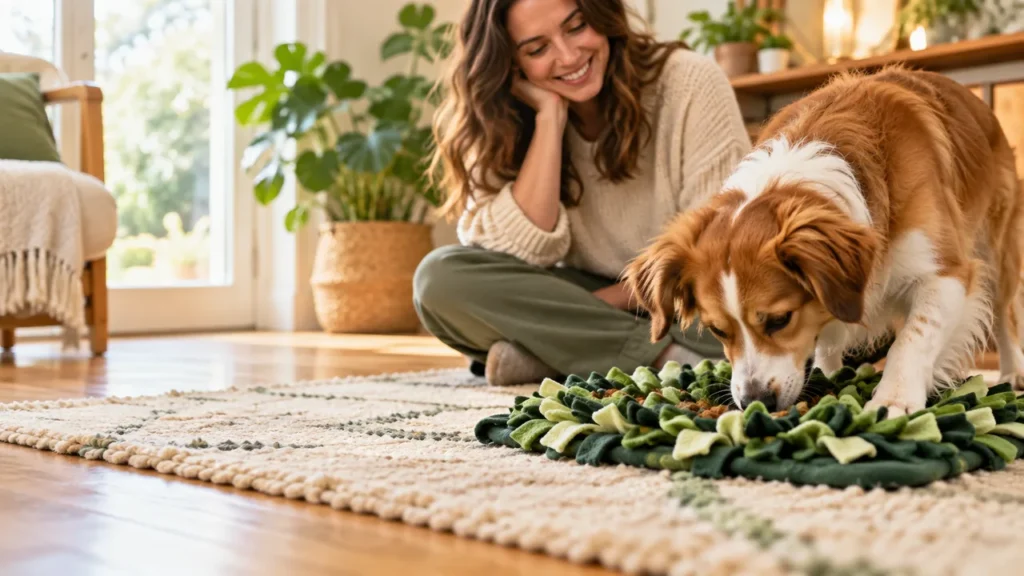
2. Try a snuffle mat or towel search
Place a small part of a meal in a snuffle mat designed for dogs, or loosely fold a clean towel around kibble while supervising. Watch to make sure your dog is sniffing rather than chewing or swallowing the fabric. Put the material away when the game ends.
3. Rotate familiar toys
Keep a few safe toys available and rotate others every so often. A familiar toy can feel novel again after a short break. Check toys for loose parts or damage and choose sizes and materials suited to your dog’s chewing style.
4. Practice a short training game
Try hand targeting, a simple “find it” cue or a few easy repetitions of a familiar skill. Let your dog pause or leave. End the game if they seem frustrated or overexcited.
5. Make a supervised cardboard search
For dogs who do not eat cardboard, place a few treats in an open, clean box with loose packing paper and supervise closely. Remove it if your dog starts shredding and swallowing pieces. Skip this activity for dogs who ingest non-food objects.
6. Offer a choice of resting spots
Set up a comfortable bed or mat in a quiet place and let your dog choose whether to settle there. Calm rest is part of a balanced day too.
7. Add a sniff-friendly walk indoors
On a rainy day, let your dog explore a safe room at their own pace, sniffing a few new objects placed on the floor. Keep pathways clear and avoid anything fragile, toxic or small enough to swallow.
Make enrichment safe and individual
Supervise new activities, use food that fits your dog’s diet, and stop if your dog becomes distressed or tries to ingest the activity itself. Some dogs guard food or toys; if that is a concern, do not take items away or set up shared food games. Ask your veterinarian or a qualified behavior professional for a safe plan.
Choose one idea, make it easy, and notice what your dog enjoys. A small routine that suits your dog is more useful than an elaborate activity they find stressful.
General educational information only. Follow product safety directions and consult your veterinarian about diet or health needs.