
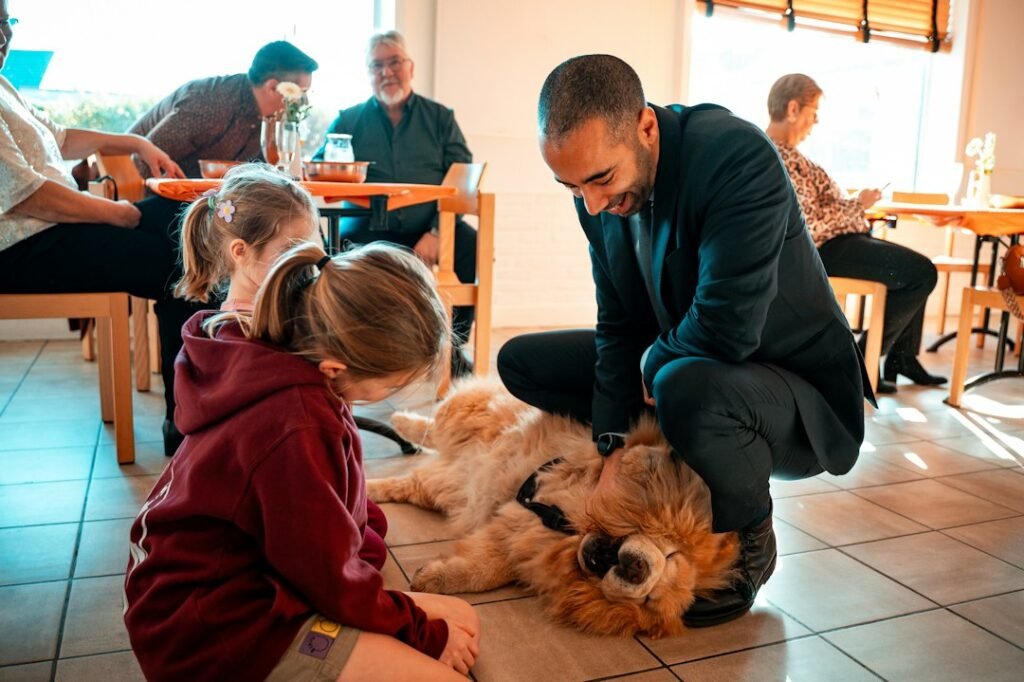
Good puppy socialization is not about making your puppy meet every person or dog. It is about helping them experience everyday life calmly, safely, and at their own pace. A thoughtful puppy socialization checklist can help you build confidence without overwhelming your puppy.
The first few months are an especially valuable learning period. The American Veterinary Society of Animal Behavior (AVSAB) recommends safe, positive social experiences during this period rather than waiting until a puppy has completed every vaccination. Your veterinarian can help you choose low-risk settings based on your puppy’s health and local disease risks.
What Should Puppy Socialization Include?
Socialization means gradually introducing your puppy to the people, animals, sounds, surfaces, handling, and situations they are likely to encounter throughout life. The goal is a relaxed, curious response—not forced interaction.
- People: adults, children at a respectful distance, people wearing hats, glasses, uniforms, or carrying bags.
- Sounds: traffic, doorbells, household appliances, bicycles, distant construction, and recorded noises played quietly.
- Surfaces: grass, carpet, rubber mats, pavement, gravel, and safe textured flooring.
- Handling: gentle touches around paws, ears, mouth, collar, and body, paired with treats.
- Places: calm car rides, a friend’s clean home, the veterinary clinic, and quiet outdoor viewpoints.
- Animals: calm, healthy, vaccinated dogs and other animals only in controlled, appropriate settings.
Puppy Socialization Checklist by Age
Before 8 Weeks: Early Experiences
Breeders and caregivers can provide gentle handling, age-appropriate sounds, different safe surfaces, and short positive interactions with people. Puppies should remain with their mother and littermates until at least the appropriate age advised by a veterinarian and local welfare guidance.
8 to 12 Weeks: Build Positive Associations
Introduce a few new experiences each day. Let your puppy observe people from a comfortable distance, investigate household objects, hear everyday sounds at low intensity, and practise gentle handling. Reward voluntary curiosity with food, play, or praise.
12 to 16 Weeks: Expand Carefully
Continue practising with new environments, calm visitors, car travel, grooming routines, and safe dog encounters. Keep experiences short and give your puppy breaks. Continue socialization after this period; learning does not stop at 16 weeks.
How to Socialize a Puppy Safely Before Full Vaccination
Do not take an incompletely vaccinated puppy into dog parks, pet-store floors, or other heavily used dog areas without veterinary advice. Instead, ask your veterinarian about clean puppy classes, controlled visits with healthy vaccinated dogs, carrying your puppy in public, or observing the world from a clean blanket or vehicle.
AVSAB notes that well-managed puppy classes can begin as early as 7–8 weeks when the puppy has received the required initial vaccination and deworming and remains current with its vaccine schedule. Requirements vary, so confirm them with your veterinarian and the class provider.
Signs Your Puppy Is Comfortable
- Loose body and relaxed movements.
- Willingness to sniff, explore, play, or take treats.
- Ability to look at a new thing and then disengage.
- Quick recovery after a brief surprise.
Signs You Should Slow Down
Turning away, hiding, freezing, repeated lip licking, tucked tail, trembling, trying to escape, or refusing normally valued treats can indicate discomfort. Increase distance, reduce the intensity, and let your puppy choose whether to approach. Never force a greeting or hold a frightened puppy near a trigger. If fear is persistent or severe, ask your veterinarian for help from a qualified reward-based behavior professional.
A Simple Daily Socialization Routine
- Choose one or two new, low-pressure experiences.
- Start far enough away that your puppy remains relaxed.
- Pair the experience with small treats, play, or praise.
- Allow your puppy to move away or take a break.
- Finish while things are going well and note what your puppy handled comfortably.
Short, positive sessions are more useful than a packed day of introductions. Your puppy does not need to greet everyone; calmly noticing the world is valuable socialization too.
Frequently Asked Questions
When should I start socializing my puppy?
Begin with safe, gentle experiences early in life. The first three months are especially important, but continue providing positive experiences throughout adolescence and adulthood.
Can I socialize my puppy before all vaccinations are complete?
Often, yes, with sensible precautions and veterinary guidance. Choose controlled, clean environments and avoid places where unknown dogs gather.
Does my puppy need to meet every dog?
No. Calm observation and positive experiences around suitable dogs are more important than meeting as many dogs as possible.
What if my puppy is scared of something?
Increase distance, stop the interaction, and try again later at a lower intensity. Do not punish or force the puppy. Seek professional advice if fear continues.
Keep Building Your Puppy’s Foundations
For more practical guidance, read our guides on the puppy teething timeline, choosing safe puppy toys, and teaching a puppy to stay home alone.
Further reading: American Veterinary Society of Animal Behavior: Puppy Socialization Position Statement.
Educational information only. For vaccination, disease-prevention, or behavior concerns, follow advice from your veterinarian.