
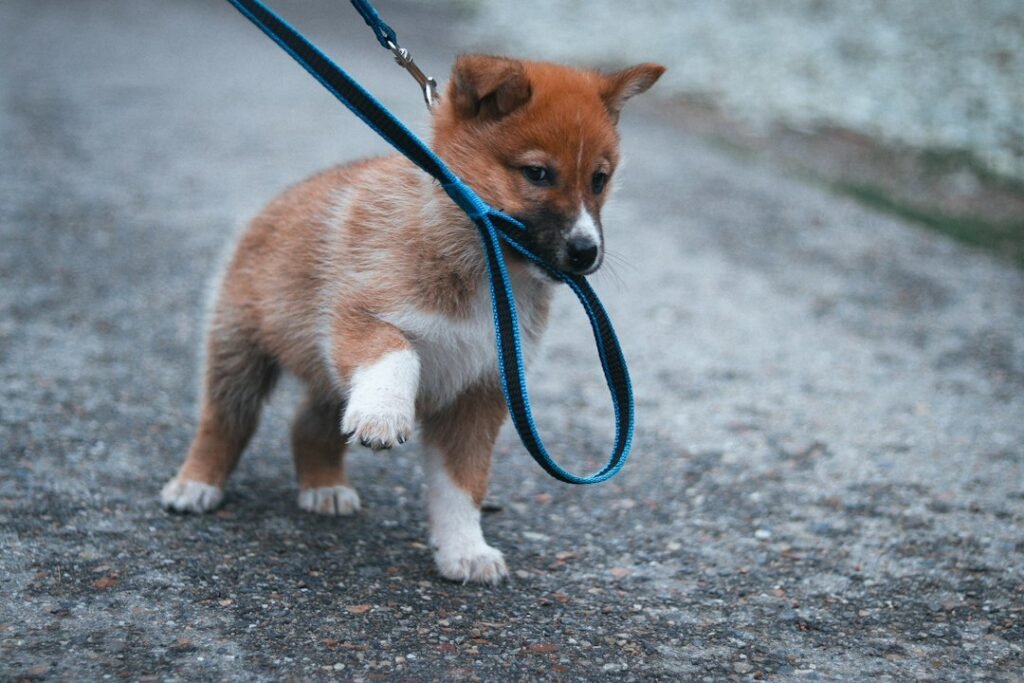
Teaching a puppy to walk on a leash takes patience, short practice sessions and rewards for the behavior you want. The goal is not to make a young dog march perfectly beside you straight away. Start by helping your puppy feel comfortable wearing a harness or collar, learn that staying near you is rewarding, and discover that a loose leash keeps the walk moving.
1. Choose Comfortable, Well-Fitted Equipment
Use a lightweight, fixed-length leash and a properly fitted flat collar or well-fitted Y-shaped harness. You should be able to fit two fingers comfortably under a collar or harness straps, while ensuring your puppy cannot slip out. Avoid using equipment that tightens, causes pain or restricts normal movement. Ask your veterinarian or a qualified force-free trainer for help with fit if needed.
2. Let Your Puppy Get Used to the Leash Indoors
Before heading outside, allow your puppy to investigate the leash while it is unattached. Reward calm curiosity. Clip it on for a few minutes in a safe room, supervise continuously, and offer treats or a toy. Remove it if your puppy becomes distressed or starts chewing it. Never leave a leash attached to an unattended puppy.
3. Reward Your Puppy for Staying Near You
Begin in a quiet, low-distraction area. Hold a few small treats near the side where you want your puppy to walk. Take one or two steps and reward when your puppy follows with the leash slack. Gradually add more steps as your puppy understands the game. Use a cheerful marker word such as “yes” immediately before giving the reward.
4. What to Do When Your Puppy Pulls
If the leash becomes tight, stop moving calmly. Wait for your puppy to turn back, move closer or create slack in the leash, then praise and continue. You can also change direction gently before the leash tightens. Do not jerk the leash, drag your puppy or punish them for being excited. Keep the lesson simple and reward frequent check-ins.
5. Practise Around Distractions Gradually
Once your puppy can walk a few steps in a quiet space, practise in the garden or another calm outdoor area. Add mild distractions one at a time, such as a person at a distance. If your puppy cannot respond or take treats, the environment may be too difficult; move farther away and make the exercise easier.
6. Keep Puppy Walks Short and Age-Appropriate
Young puppies tire quickly and need time to sniff, explore and rest. Use short, positive outings rather than expecting a long adult-style walk. Follow your veterinarian’s advice about outdoor access and vaccination risks in your area. A secure, clean space can be useful for early leash practice.
Common Leash-Training Mistakes to Avoid
- Pulling or yanking the leash when the puppy moves ahead.
- Practising for too long after the puppy becomes tired or frustrated.
- Starting in a busy place before basic skills are established.
- Repeating cues without showing the puppy what earns a reward.
- Using a retractable leash in crowded or unsafe areas during early training.
Frequently Asked Questions
At what age can I start leash training a puppy?
You can introduce a lightweight harness or leash indoors once your puppy is comfortable with gentle handling. Ask your veterinarian when outdoor walks are appropriate based on your puppy’s vaccination status and local risks.
How long does it take to teach a puppy not to pull?
Progress varies with age, temperament, practice and distractions. Several short sessions each day are usually more useful than one long session. Expect gradual improvement rather than an instant result.
Should I let my puppy sniff during walks?
Yes. Sniffing is a normal way for dogs to explore. Build in sniff breaks and use a cue such as “go sniff” so your puppy can enjoy exploring while also practising walking with a loose leash.
Is a harness or collar better for leash training?
Either can be suitable when correctly fitted and used gently. A well-fitted harness can reduce pressure on the neck if a puppy lunges, while a flat collar may be appropriate for some dogs. Choose equipment that fits your puppy and does not cause discomfort.
Build Your Puppy’s Training Skills
Continue with our guides on choosing a puppy harness and teaching a puppy to stay home alone. For general dog-training guidance, see the American Kennel Club training resources.
This article is for general educational purposes. Seek help from your veterinarian or a qualified reward-based trainer if your puppy is fearful, distressed or difficult to handle on walks.
Image credit: anotherxlife / Unsplash.