
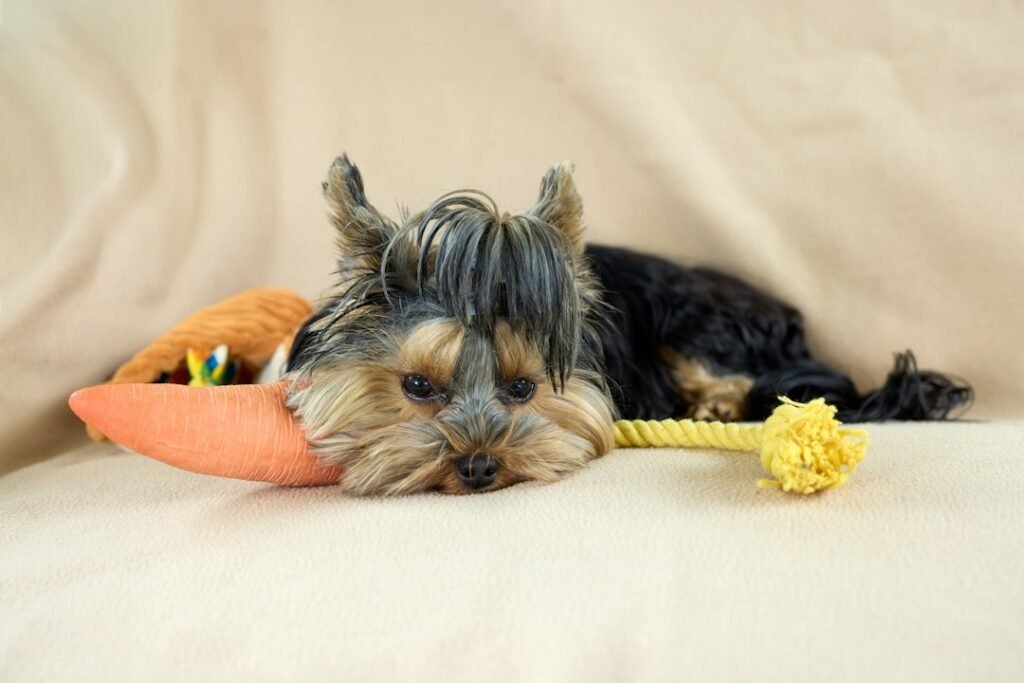
Choosing safe toys for puppies is about more than finding something cute. The right toy should suit your puppy’s current size, chewing style and energy level, while being sturdy enough not to break into pieces during play. Because puppies grow and change how they chew, a toy that works today may need to be replaced or moved to supervised play later.
Use this practical guide to compare common puppy toy types, spot potential hazards and build a simple toy-check routine. No toy is completely risk-free, so supervision and regular inspection remain essential.
What Makes a Toy Suitable for a Puppy?
A suitable puppy toy should be large enough that it cannot be swallowed or lodged in the mouth, have no easily detached decorations, and be appropriate for the way your puppy plays. Check the manufacturer’s age and size guidance, but also watch your own puppy: labels cannot predict whether an individual dog will gently carry a toy or try to tear it apart.
- Correct size: Avoid balls and chew toys that can fit entirely into your puppy’s mouth or could become stuck.
- Secure construction: Look for firmly attached parts and seams. Avoid loose eyes, ribbons, bells, beads or small plastic pieces.
- Suitable firmness: Very hard objects can damage teeth. A toy with some give is generally a better starting point than a rock-hard chew.
- Appropriate durability: Choose for your puppy’s actual chewing strength, not just their breed or weight.
- Easy to inspect and clean: Toys that can be checked thoroughly and cleaned according to the maker’s instructions are easier to manage.
Common Types of Puppy Toys
1. Puppy-sized rubber chew toys
Rubber chew toys can give puppies an appropriate object to mouth and may be useful during teething. Choose a size that cannot be swallowed, check that the rubber is not excessively hard, and follow the product’s age guidance. Inspect it after each play session for cracks, torn edges or missing pieces. If your puppy can bite chunks off, remove it and choose a different option.
2. Food-dispensing and puzzle toys
Simple food puzzles can turn part of a meal into a short enrichment activity. Start with an easy design so your puppy can succeed without becoming frustrated. Use a portion of their normal daily food where practical, supervise the first sessions, and wash the toy as directed. For more ideas, see our guide to indoor puppy enrichment activities.
3. Soft comfort toys
Some puppies enjoy carrying or resting beside a soft toy. These are best for puppies that do not immediately shred fabric or pull out stuffing. Check seams, labels and attachments before offering one. If stuffing, squeakers or small components become exposed, take the toy away rather than trying to patch a heavily damaged item for continued chewing.
4. Balls and fetch toys
Choose a ball that is too large to swallow but still easy for your puppy to pick up. Avoid damaged balls and toys that split or shed pieces. Keep early fetch sessions short and playful, and do not encourage repetitive high-impact jumping. A ball is for interactive play, not a substitute for supervision.
5. Rope toys for interactive tug
Rope toys are usually best used for a game with you rather than left out as an unsupervised chew. Stop the game if strands begin to unravel or your puppy tries to swallow them. Put the rope away after play and replace it when it becomes frayed.
Toys and Chews to Avoid or Use With Extra Caution
Do not give a puppy an item simply because it is sold as a chew or looks durable. Avoid toys with small detachable parts, loose strings or ribbons, exposed batteries, sharp edges, or pieces your puppy can easily bite off. Household objects such as socks, children’s toys and rubber bands are not safe substitutes.
Be cautious with very hard chews, including bones, antlers and hard nylon items. Veterinary guidance warns that hard objects can fracture teeth, while pieces of damaged toys or chews can create choking or digestive problems. Ask your veterinarian to help assess any edible chew or product that is not clearly suitable for your puppy’s age and size.
How to Check a Puppy Toy Before and After Play
- Before play: Check the size, seams, edges, attachments and manufacturer’s instructions.
- During the first sessions: Stay close and notice whether your puppy carries, mouths, chews gently or tries to dismantle the toy.
- After play: Look for cracks, punctures, missing pieces, exposed stuffing or loose strands.
- Remove damaged toys: Do not wait until a toy is falling apart. Replace it when it can shed pieces or no longer fits your puppy safely.
- Recheck as your puppy grows: Review toy size and condition regularly. A small toy can become easier to swallow as your puppy gets bigger and stronger.
How Many Toys Does a Puppy Need?
You do not need a large toy collection. A small rotation can cover different needs: one suitable chew toy, one easy food puzzle, one interactive toy for games and, if your puppy enjoys it, one soft comfort toy for supervised use. Rotate them occasionally to keep play interesting, and store away toys that are intended only for interactive sessions.
If your puppy becomes overexcited, starts biting hands or cannot settle, pause the game and offer a calm activity or rest break. Our article on puppy biting versus chewing explains how to redirect mouthing appropriately. You can also review our room-by-room puppy-proofing checklist to remove unsafe household objects from reach.
When to Contact Your Veterinarian
Contact your veterinarian promptly if you think your puppy has swallowed part of a toy or chew, even if they seem comfortable at first. Seek emergency veterinary help if your puppy is choking, struggling to breathe, repeatedly retching, collapsing or showing severe distress. Do not try to make your puppy vomit unless a veterinary professional specifically instructs you to do so.
Your veterinarian can also recommend suitable toy materials and sizes if your puppy has dental problems, a strong destructive chewing style, food sensitivities or a medical condition that affects play.
Frequently Asked Questions
Are rubber toys safe for puppies?
Some puppy-sized rubber toys can be appropriate when their size, firmness and construction suit the individual puppy. Supervise new toys and remove them if pieces begin to break off.
Can I leave my puppy alone with a chew toy?
Do not assume a toy is safe for unsupervised use just because it is marketed for puppies. First observe how your puppy uses it. Toys that can unravel, split, expose stuffing or release small parts should be limited to supervised play or removed.
How often should I replace puppy toys?
There is no fixed timetable. Inspect toys regularly and replace them as soon as they become cracked, torn, frayed, too small or otherwise damaged. Reassess the size as your puppy grows.
Are hard bones good for teething puppies?
Very hard chews can damage teeth and may also break into pieces. Ask your veterinarian for age-appropriate options rather than choosing a chew based only on how long it lasts.
Final Thoughts
The best puppy toy is one that matches your puppy’s size and play style, stays in good condition and is used with appropriate supervision. Start with a few simple options, watch how your puppy handles each one, and check them often as your dog grows. When you are unsure whether a toy or chew is suitable, your veterinarian is the safest source of individual advice.
Further reading: The American Kennel Club’s guide to toy shopping for puppies, the American Animal Hospital Association’s chew-toy safety guidance and VCA’s advice on choosing chew toys offer additional safety considerations.
Disclaimer: This article provides general educational information and is not a substitute for veterinary advice. Toy suitability varies by puppy; consult your veterinarian for recommendations specific to your dog.