
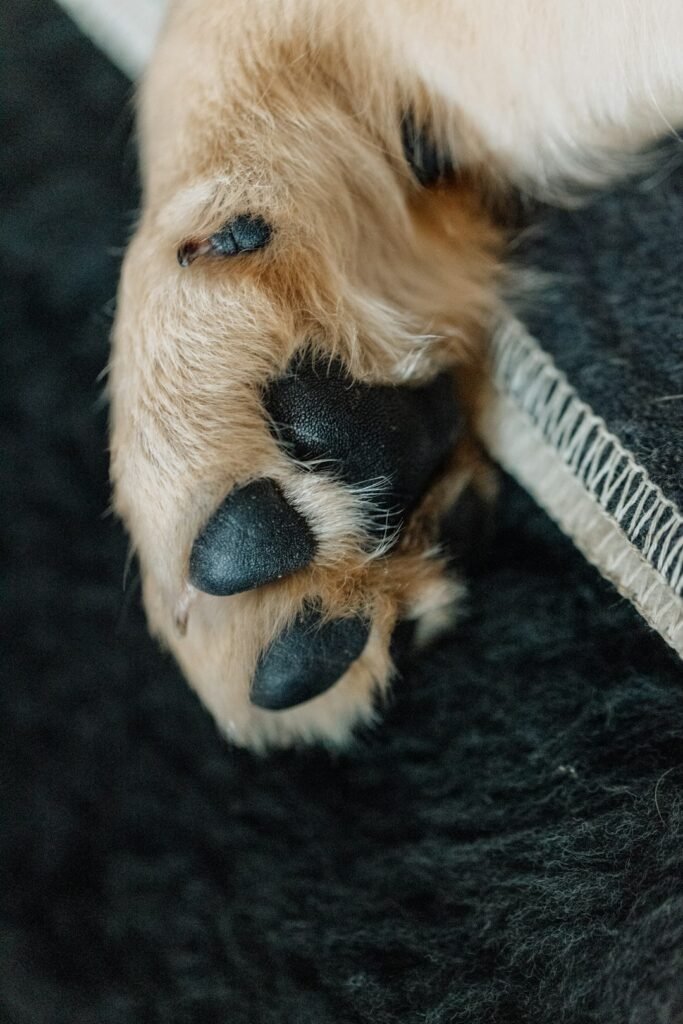
Regular nail care helps your dog walk comfortably, but trimming can feel intimidating if you are worried about cutting the sensitive tissue inside a nail. The safest approach is to work in good light, remove only a tiny amount at a time, and stop before your dog becomes distressed. You do not need to finish every paw in one session.
This guide explains how to prepare, where to trim, what to do with dark nails, and when to ask a veterinarian or professional groomer for help.
How to Tell When Your Dog’s Nails Need Trimming
Check your dog’s nails about once a week. They may need a trim when they touch the floor while your dog is standing, make a regular clicking sound on hard surfaces, or catch on fabric. Nail growth and natural wear vary with the dog, activity level, and walking surfaces, so there is no single schedule that suits every dog.
Remember to check the dewclaws—the nails higher on the inside of the legs. They may not contact the ground and can become overgrown even when the other nails look short. If a nail curls toward the paw pad, is split, or appears painful, arrange a veterinary check instead of trying to correct it with a routine trim.
What You Need Before You Start
- Dog nail clippers or a pet nail grinder: Choose a tool suited to your dog’s nail size and one you can control comfortably.
- Good lighting: Bright light helps you inspect the nail and spot the quick when it is visible.
- Small, easy-to-give treats: Reward calm participation throughout the process.
- Pet nail styptic powder: Keep it nearby in case a nail is accidentally cut too short; follow the product directions.
- A non-slip surface: Help your dog stay comfortable and balanced.
If you have never trimmed a dog’s nails before, ask your veterinarian or veterinary nurse to demonstrate the technique on your dog first. The American Kennel Club’s nail-trimming guide also recommends having a clotting product available and learning the method before you begin.
How to Trim Dog Nails Safely: Step by Step
1. Make the tools familiar
Start when your dog is relaxed. Let them sniff the clippers, then reward them. Touch a paw briefly, give a treat, and release it. On another repetition, gently touch one toe or let the closed clippers touch a nail without cutting. Keep these practice sessions short. If your dog pulls away, freezes, trembles, growls, or tries to escape, pause and return to an easier step later.
Gradual, reward-based practice can help build cooperation. For more ideas, see our guide to reward-based dog training basics.
2. Position your dog comfortably
Choose a quiet place with bright lighting and a surface that will not slide. Let your dog sit or lie in a natural position. Hold the paw gently and keep the leg in a comfortable range of motion; do not twist it to reach a nail. If another adult is helping, their job should be to offer treats and support calm positioning—not to pin a frightened dog down.
3. Find the quick before cutting
The quick is the living tissue inside the nail that contains blood vessels and nerves. On pale nails, it often appears pink. Leave a safe margin and do not cut into it. On black or dark nails, the quick can be difficult to see, so take off only the very tip in small increments and inspect the cut surface after each clip. Stop if you are unsure how close you are.
4. Remove only a small tip
Use a sharp, appropriately sized dog nail trimmer and make a controlled cut to the tip, following the nail’s natural direction. Avoid trying to shorten a long nail in one large cut. Small, gradual trims reduce the chance of reaching the quick. If your dog has very long nails, a professional may need to help plan a gradual return to a comfortable length because the quick can extend farther down an overgrown nail.
5. Take breaks and check each paw
Reward your dog after each nail—or after each brief handling step if that is all they can manage today. You can stop after one or two nails and continue another day. Check the dewclaws, but do not rush them if the angle is awkward. A calm, partial session is better than forcing the dog through a stressful full trim.
Dog Nail Trimming: Clippers or Grinder?
Both tools can work when used correctly. Clippers remove the tip quickly, but you must control each cut. A grinder smooths the nail gradually, although its sound and vibration can worry some dogs. Introduce either tool slowly before using it on the nails. If you use a grinder, follow the manufacturer’s instructions and keep fur clear of moving parts to avoid catching it.
For detailed guidance on nail length, tool choice, and safe handling, read the Washington State University Veterinary Teaching Hospital guide to clipping a dog’s nails.
What to Do If You Cut the Quick
Stop trimming and keep yourself calm. Apply pet nail styptic powder according to its label, using gentle pressure as directed. Do not continue trimming that nail during the same session. Contact your veterinarian if bleeding does not stop promptly, the nail is torn or badly damaged, your dog seems very painful, or you are uncertain how to care for the injury.
When You Should Get Professional Help
Do not force a trim if your dog becomes highly distressed, snaps, or cannot be handled safely. Stop and ask your veterinarian or a qualified groomer for help. A professional can demonstrate the technique, assess overgrown nails, and help you plan gradual handling practice. If your dog’s reaction is intense or getting worse, ask your veterinary team about a behavior-support plan.
Learning to recognise stress signals can help you stop before a situation escalates. Our guide to dog body language and signs of stress explains common signals to watch for. If you notice a broken nail, swelling, redness, discharge, limping, or a nail growing into the paw pad, contact a veterinarian rather than treating it as routine grooming.
A Simple Nail-Care Routine
- Check all nails and dewclaws weekly.
- Keep treats and the right tool ready before starting.
- Practice paw handling separately from trimming.
- Trim only small amounts and stop when the quick is hard to judge.
- Record when you trim so you can adjust the interval to your dog’s growth and natural wear.
Routine grooming is also a useful time to notice changes in your dog’s feet. For other preventive-care questions to discuss with your veterinarian, use our dog wellness visit checklist.
Frequently Asked Questions
How often should I trim my dog’s nails?
It depends on how quickly the nails grow and how much they wear down naturally. Check weekly and trim when needed, rather than relying on a fixed calendar interval.
Can I trim black dog nails at home?
It can be harder to see the quick in dark nails. Remove only a tiny amount at a time and stop if you are unsure. Ask a veterinarian or experienced groomer to demonstrate the technique if this is new to you.
What if my dog will not let me touch their paws?
Do not force the trim. Start with very brief paw touches paired with rewards, and build up gradually over multiple sessions. If handling remains difficult or unsafe, seek professional help.
General information only: this article is not a substitute for veterinary advice. Contact your veterinarian about pain, injury, abnormal nails, or concerns about safe grooming.
Featured image: Photo by jum.jpeg on Unsplash.