
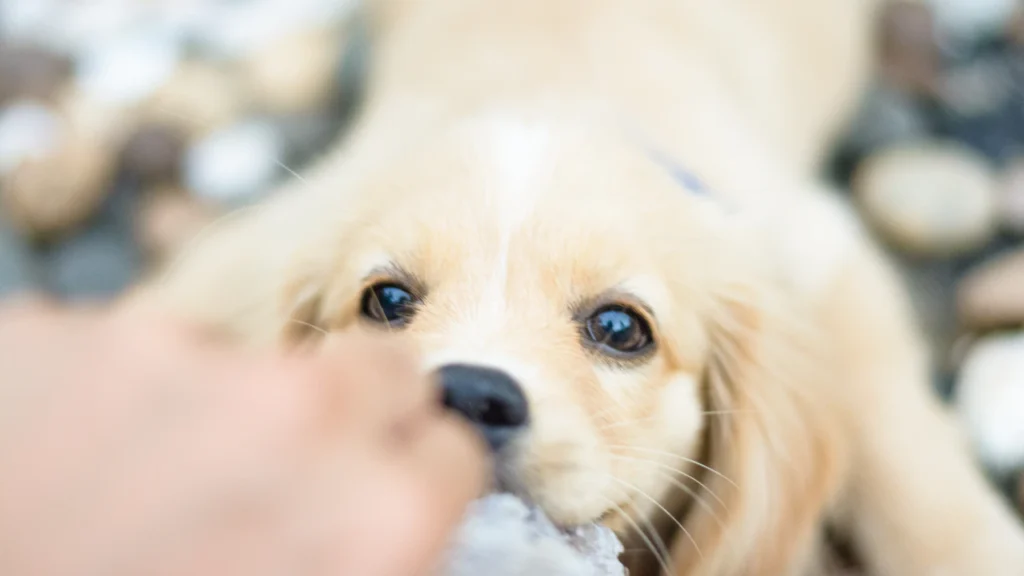
Puppy biting is common, especially during play and teething. Puppies explore with their mouths, but they still need to learn how to interact gently with people. The most effective approach is calm, consistent training—not yelling, hitting, or frightening your puppy.
Why Puppies Bite
Puppies may nip because they are teething, excited, tired, overstimulated, or trying to start a game. Notice what happens just before the biting: it can help you identify whether your puppy needs a toy, a quiet break, a nap, or a change in play.
7 Positive Ways to Stop Puppy Biting
1. Redirect to an appropriate toy
Keep a soft tug toy or puppy-safe chew nearby. When teeth touch skin or clothing, calmly offer the toy instead. Praise your puppy when they bite the toy rather than your hands.
2. Pause play when teeth touch skin
If your puppy keeps nipping, stop moving your hands and briefly pause the interaction. Turn away or step behind a gate for a short moment if needed. Resume play when your puppy is calmer. Keep the pause quiet and predictable.
3. Reward gentle behavior
Use a small treat, praise, or continued play to reward four paws on the floor, relaxed interaction, and choosing a toy. Rewarding the behavior you want makes the lesson clearer than punishing mistakes.
4. Keep hands out of the game
Avoid wrestling with your hands or encouraging your puppy to chase fingers. Use toys for tug and fetch so your puppy learns what is appropriate to bite.
5. Check for tiredness and overstimulation
Puppies often become extra mouthy when they are overtired or overexcited. Offer a calm break, a toilet trip, water, or a nap in a comfortable, safe space. Do not use a crate as punishment.
6. Make sure chewing needs are met
Provide age-appropriate chew toys and supervise chewing. Choose products that are suitable for your puppy’s size and chewing style, and remove damaged toys or pieces that could be swallowed.
7. Be consistent with everyone at home
Ask family members to use the same rules: redirect biting to a toy, pause play for repeated nipping, and reward gentle choices. Short, regular practice sessions are easier for a young puppy than long training sessions.
What Not to Do
Do not hit your puppy, hold the muzzle shut, pin the puppy down, or use intimidation. These methods can create fear and may make biting worse. For guidance on humane training, read the American Veterinary Society of Animal Behavior position statements.
When to Get Professional Help
Seek help from your veterinarian or a qualified reward-based trainer if biting is severe, causes puncture wounds, appears fearful or defensive, escalates suddenly, or is accompanied by stiff posture, guarding, or repeated snapping. A veterinarian can also check for pain or other medical causes.
Build Better Puppy Habits
Training works best when the whole routine supports your puppy. Explore our puppy help guides, practice the basics in our dog training section, and learn more about common signals in our dog behavior resources. For another practical overview, see the American Kennel Club’s puppy-biting advice.
Frequently Asked Questions
Will my puppy grow out of biting?
Mouthing often decreases as puppies mature, but they still need guidance. Consistent redirection and rewarding gentle behavior help build safer habits.
Should I yelp when my puppy bites?
Some puppies become more excited by a loud yelp. If that happens, stay calm, pause play, and redirect to a toy instead.
How long does it take to stop puppy biting?
Progress varies with age, temperament, teething, and consistency. Look for gradual improvement over time, and ask a qualified professional for help if biting is intense or worsening.
Training note: This article provides general educational information. For sudden or concerning behavior changes, consult your veterinarian.