
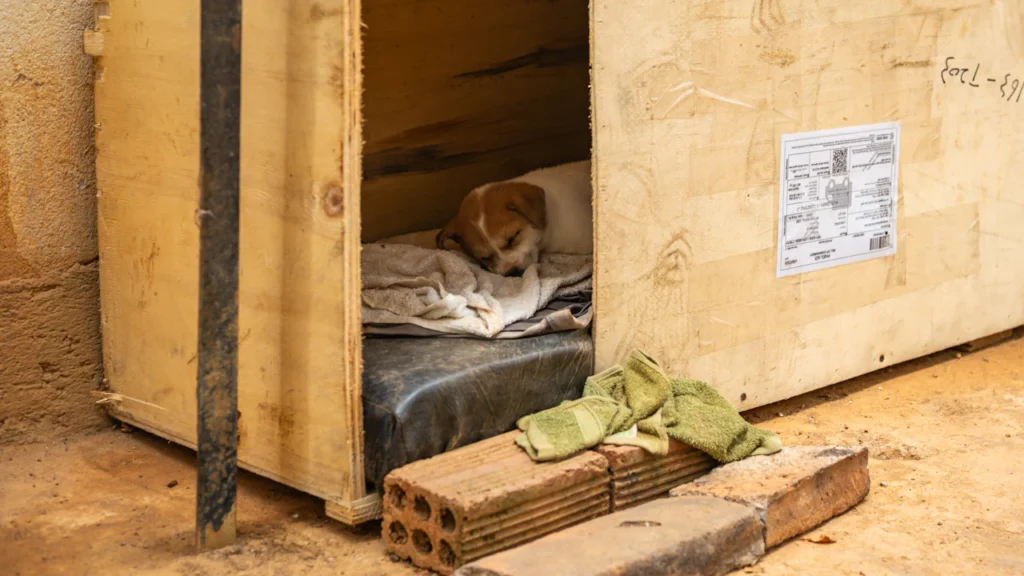
Bringing home a puppy is exciting, but bedtime can feel difficult when your puppy is new to your home and unsure about sleeping alone. Crate training can help create a predictable, comfortable resting space when it is introduced gradually and never used as punishment.
This guide explains how to crate train a puppy at night with a gentle first-week plan, practical potty-break guidance, and safe ways to respond to whining. Every puppy develops at a different pace, so use your puppy’s comfort and needs—not a fixed deadline—to decide when to move forward.
Before You Start: Set Up the Crate Correctly
Choose a sturdy, well-ventilated crate that lets your puppy stand up, turn around, and lie down comfortably. A divider can help adjust a larger crate as your puppy grows. Place it somewhere calm but close enough that your puppy can hear and smell you; for many new puppies, the bedroom is a helpful starting point.
- Make the crate comfortable with safe bedding if your puppy does not chew or soil it.
- Remove collars, harnesses, and anything that could snag while your puppy is unattended.
- Keep the door open during early exploration and let your puppy enter voluntarily.
- Use puppy-safe treats or a suitable food-stuffed toy to build a positive association.
The crate should be a resting place, not a punishment. Never force your puppy inside or use it to manage long periods without exercise, attention, or bathroom breaks.
How to Crate Train a Puppy at Night: A First-Week Plan
Days 1–2: Make the Crate Feel Safe
During the day, toss a few treats near the entrance, then just inside the crate. Praise your puppy for investigating or stepping in. Let them leave whenever they want. Serve a meal near the crate or inside it with the door open if your puppy is comfortable.
When your puppy willingly stays inside for a short time, close the door for only a few seconds while you remain nearby, then open it before your puppy becomes worried. Repeat in small, easy steps. If your puppy backs away, freezes, or becomes distressed, make the next repetition easier.
Days 3–4: Practise Short, Calm Door Closures
After your puppy has had a chance to toilet, play gently, and settle, invite them into the crate with a treat or safe chew. Close the door briefly while sitting beside it. Gradually increase the duration only while your puppy remains relaxed. Practise short daytime rests so the crate does not become associated only with being left alone at night.
Keep sessions positive and end on a manageable success. Avoid leaving a puppy to “cry it out” if the crying escalates into panic or intense distress.
Days 5–7: Build a Predictable Bedtime Routine
Use the same simple sequence each night: calm play earlier in the evening, a final toilet trip, a quiet wind-down, and then a treat for entering the crate. Keep greetings and nighttime trips low-key. Place the crate beside your bed at first if that helps your puppy settle; you can gradually move it later if that is your goal.
These days are a starting point, not a deadline. Some puppies need more than a week to feel comfortable. Continue at the pace your puppy can handle.
What to Do if Your Puppy Whines in the Crate
First, consider what your puppy may need. A young puppy may be asking to toilet, feeling lonely in a new home, or finding the step too difficult. Listen for changes in the intensity of the noise and look at your puppy’s overall behavior.
- If a potty break may be needed: Take your puppy outside quietly on a leash, give them a brief chance to toilet, praise calmly if they go, and return to bed without turning it into playtime.
- If your puppy is mildly unsettled: Stay nearby and offer calm reassurance. At the next training session, reduce the duration or make the crate more rewarding.
- If your puppy appears panicked: Do not insist on prolonged confinement. Make the situation safer and easier, then seek help from a qualified reward-based trainer or veterinary behavior professional if the distress persists.
Do not punish whining, bang on the crate, or shout. Also avoid assuming every whine is a request for attention: very young puppies often cannot hold their bladder through the night.
How Often Does a Puppy Need a Potty Break Overnight?
There is no single schedule that fits every puppy. Age, size, health, daytime routine, and individual development all matter. Very young puppies commonly need overnight bathroom breaks, and some will need more than one. Take your puppy out before bedtime and respond when they wake and appear to need to go.
Keep a simple log of bedtime, wake-ups, and successful toilet trips for several nights. This can help you notice a pattern and adjust the routine. If accidents are frequent despite reasonable breaks, or your puppy suddenly starts urinating more often, contact your veterinarian to rule out a medical problem. For a broader routine, see our puppy house-training schedule.
Common Crate-Training Mistakes to Avoid
- Moving too quickly: Long door closures before your puppy is comfortable can create fear. Build duration gradually.
- Using the crate as punishment: Keep it associated with rest, safety, and good experiences.
- Skipping daytime practice: Short positive sessions during the day help your puppy learn the routine before bedtime.
- Ignoring distress or toileting needs: Check what is causing the noise instead of following a rigid rule.
- Expecting instant results: Progress varies. Revisit an easier step whenever your puppy struggles.
When to Ask for Professional Help
Speak with your veterinarian if your puppy seems uncomfortable, has repeated accidents, shows sudden behavior changes, or may be experiencing pain. If confinement triggers persistent panic, escape attempts, or self-injury risk, stop pushing the crate-training step and ask your veterinarian for a referral to a qualified behavior professional.
For more beginner guidance, read our plan for your first week with a new puppy, explore our dog training guides, or visit our puppy help resources.
The Takeaway
Successful nighttime crate training is built on trust, gradual practice, and a realistic bathroom schedule. Make the crate inviting, stay close while your puppy adjusts, and respond thoughtfully to whining. The aim is not simply to get through the night; it is to help your puppy feel safe enough to rest.
For evidence-based guidance, review the American Kennel Club’s step-by-step crate-training guide and the American Veterinary Society of Animal Behavior’s humane-training position statements, which recommend reward-based methods.
This article is for general educational purposes and does not replace individualized veterinary or behavior advice.