
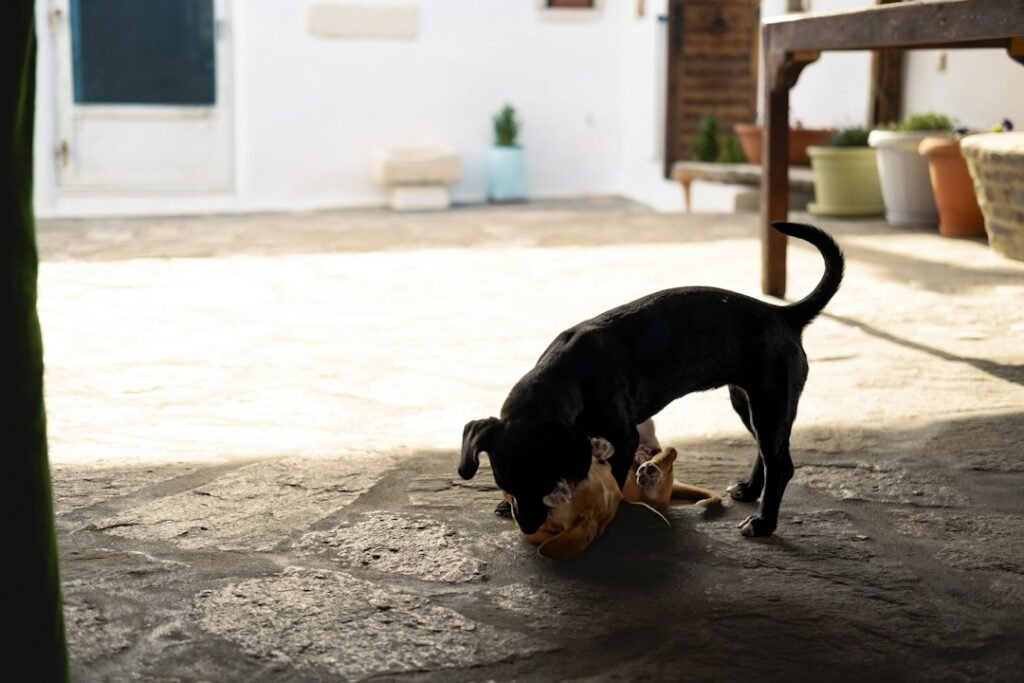
Bringing a puppy into a home with an older dog takes patience. Start with distance, reward calm behaviour and let both dogs choose whether to approach.
Start Slowly
Meet in a quiet neutral area with one adult handling each dog. Keep enough distance for both to stay relaxed. Walk in the same direction, then allow a brief sniff only if both dogs are comfortable.
Keep Home Meetings Short
Remove food, chews and toys. Provide separate beds and feeding spaces. Use gates so the older dog can retreat, and supervise every interaction.
Watch Body Language
Loose movement and easy disengagement are encouraging. Stiffness, hard staring, tucked tail, repeated avoidance, growling or snapping mean the dogs need more space. Do not punish a growl; calmly separate them.
Build Good Habits
Reward the puppy for settling and leaving the older dog alone. Maintain the older dog’s routine and give each dog individual attention. Never leave them together unsupervised during the adjustment period.
When to Get Help
Ask a veterinarian or qualified reward-based behaviour professional for help if either dog has a bite history, repeatedly lunges or snaps, guards resources, or seems persistently distressed. A sudden change in an older dog’s tolerance also deserves a veterinary check.
FAQs
How long does acceptance take?
It varies from dog to dog. Progress through calm, brief interactions rather than setting a deadline.
Should I let my older dog growl?
Do not punish warning signals. Give the dog space and make the next interaction easier.
Can they be left alone together?
Not until safety and comfort are well established; use secure separation whenever you cannot supervise.
For more help, read our guides to teaching leave it and puppy crate training.