Cleaning your puppy’s paws after a walk helps remove mud, grit, road salt and other mess before it reaches your floors. Most of the time, you do not need a full bath. A gentle wipe or quick rinse is enough, as long as you dry the paws carefully and check between the toes.
Make paw cleaning part of a calm routine from the beginning. This helps your puppy become comfortable with handling and makes it easier to spot small problems early.
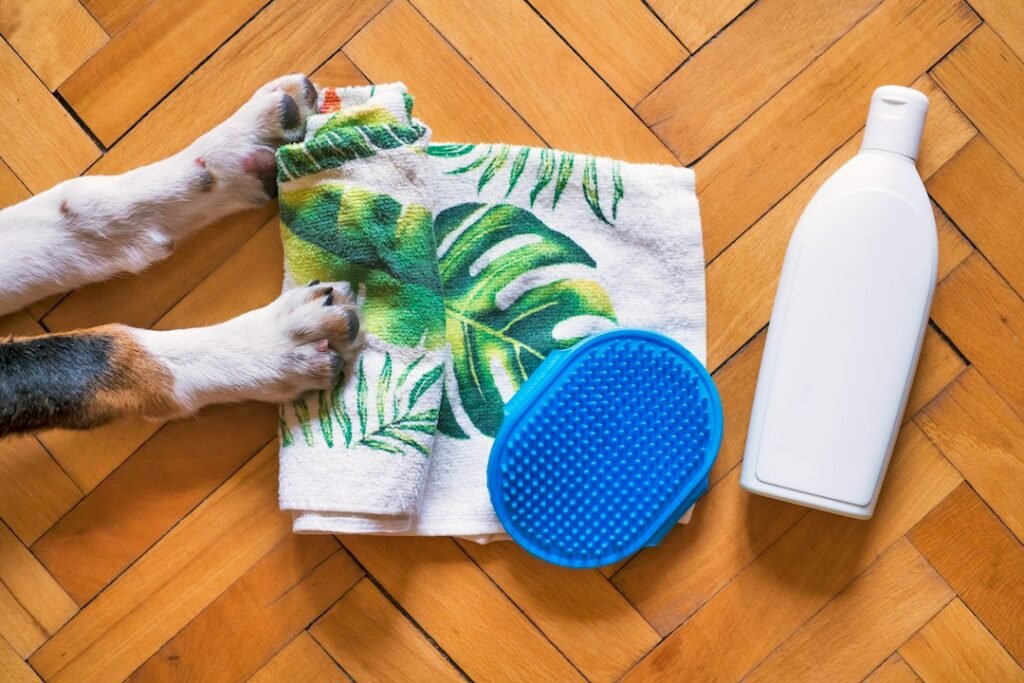
What You Need to Clean Puppy Paws
- A soft, clean towel or pet-safe grooming cloth.
- A shallow bowl or gentle stream of lukewarm water for muddy paws.
- A soft cloth for wiping between the toes.
- A treat to reward calm handling.
Avoid household disinfectants, fragranced wipes, alcohol, bleach, essential oils and harsh soaps. If you use a pet wipe, choose one labelled for dogs and follow its directions.
How to Clean Puppy Paws After a Walk
1. Let your puppy settle first
Choose a quiet spot near the entrance. Give your puppy a moment to relax, then reward calm behaviour. If your puppy is excited, start with one paw and take a short break rather than trying to clean all four at once.
2. Check each paw before wiping
Look at the pads, between the toes and around the nails. Check for mud, small stones, burrs, grass seeds, cuts, swelling or redness. Do not pull at anything deeply embedded; contact your veterinarian if you find a thorn, glass or another object that cannot be removed easily and safely.
3. Wipe away light dirt
For dust or a little surface dirt, use a soft damp cloth. Gently wipe the top and underside of each paw, including between the toes. Avoid scrubbing, which can irritate delicate skin.
4. Rinse muddy paws when needed
If the paws are caked with mud, use lukewarm water in a shallow basin or a gentle rinse. Keep the water comfortable and avoid a forceful spray. You usually do not need shampoo for ordinary outdoor dirt.
5. Dry thoroughly
Pat each paw dry with a clean towel. Gently dry between the toes, where moisture can remain. Do not rub hard or use hot air. If your puppy dislikes paw handling, reward small steps and build up gradually.
Extra Care in Winter and Hot Weather
In cold weather, check for packed snow, ice and road salt. Rinse away visible salt or de-icing residue with lukewarm water and dry the paws. Avoid letting your puppy lick dirty paws after walks. In hot weather, check the pads for tenderness, blisters or damage after walking on warm pavement. Choose cooler walking times and safer surfaces.
After walks in fields or wooded areas, check for burrs, grass seeds and ticks. If you find a tick, use a proper tick-removal tool or ask your veterinarian for help; do not burn it or apply chemicals.
How to Teach a Puppy to Accept Paw Cleaning
- Start when your puppy is relaxed, not immediately after an exciting play session.
- Briefly touch a shoulder or leg, then reward the puppy.
- Gradually move down the leg and briefly touch one paw.
- Reward calm behaviour and release the paw before your puppy struggles.
- Introduce the damp cloth, then practise one gentle wipe.
- Build up to all four paws over several short sessions.
Never chase, pin down or scold a puppy for pulling a paw away. If your puppy becomes worried, pause and return to an easier step. Gentle handling practice also supports routines such as safe nail trimming and first-time puppy grooming.
When Paw Problems Need a Vet
Contact your veterinarian if your puppy limps, repeatedly licks or chews a paw, has a cut, swelling, discharge, a damaged nail or persistent redness. Sudden pain, significant bleeding or a suspected burn needs prompt veterinary attention. Do not apply human creams or medication unless your veterinarian recommends them.
Frequently Asked Questions
Should I clean my puppy’s paws after every walk?
Check them after every walk. Wipe or rinse them when they are dirty, exposed to salt or de-icing products, or need attention. Clean, dry paws may only need a quick inspection.
Can I use baby wipes on puppy paws?
Use wipes specifically labelled as safe for dogs. Human wipes may contain fragrances or ingredients that are not intended for pets, and puppies may lick residue from their paws.
Do I need shampoo to wash muddy paws?
Usually not. Lukewarm water and a soft cloth are enough for routine dirt. Use dog shampoo only when needed and rinse it away thoroughly.
Why does my puppy keep licking its paws?
Occasional grooming can be normal, but frequent licking may signal irritation, an injury, allergies or another problem. Check the paws and ask your veterinarian if the licking persists.
Final Thoughts
A quick paw check, gentle wipe or rinse and careful drying are usually all your puppy needs after a walk. Keep the routine calm and reward cooperation. Regular checks help you notice small issues early while teaching your puppy that handling can be safe and positive.