
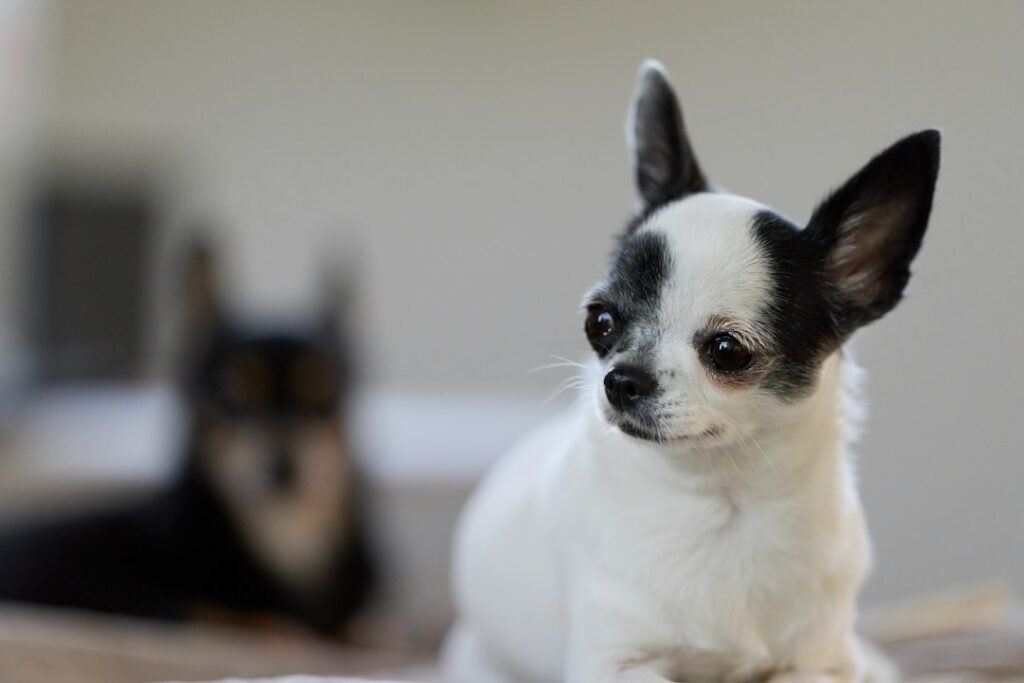
Bringing a puppy into a home with an older dog can be exciting, but the first meeting deserves patience. Dogs communicate through body language, scent and space. A calm introduction gives both animals time to assess one another without feeling trapped or pressured.
There is no fixed number of hours or days in which two dogs must become friends. The goal at first is simple: safe, low-pressure interactions that can gradually become more comfortable. Use the following plan, and slow down whenever either dog appears uneasy.
Before the First Meeting
Choose a neutral, quiet location
If possible, let the dogs meet outdoors in a quiet area neither dog strongly guards. Avoid narrow hallways, doorways and crowded rooms where one dog could feel cornered. If the older dog is uncomfortable outdoors or has mobility limits, ask your veterinarian or a qualified reward-based trainer to help adapt the setup.
Prepare separate resources
Put away food bowls, chews, favourite toys and anything either dog may guard. Prepare two leads, treats, water and separate resting spaces. Keep the puppy’s crate or pen available as a calm retreat, not as a punishment.
Consider health and vaccination status
Before close contact, make sure both dogs are healthy and that the puppy’s vaccination and parasite-prevention plan has been discussed with a veterinarian. Avoid introductions if either dog is ill, in pain or recovering from surgery.
How to Introduce a Puppy to an Older Dog
1. Start with distance
Have one adult handle each dog. Begin far enough apart that both can notice each other while remaining relaxed. Reward calm behaviour, such as looking briefly and then turning away, sniffing the ground or responding to their handler. Do not pull the dogs face-to-face.
2. Take a parallel walk
Walk in the same direction with plenty of space between the dogs. Gradually reduce the distance only if both remain loose and comfortable. Keep leads slack where safe, and avoid letting them circle tightly around each other. A short, calm walk is better than a long session that becomes stressful.
3. Allow brief sniffing if both are ready
When both dogs show relaxed body language, allow a brief approach on a loose lead. Keep the greeting short, then cheerfully call them apart and reward them. Repeat only if both choose to re-engage. Do not force contact or hold either dog still for a greeting.
4. Move to a secure, spacious area
After a calm outdoor meeting, you can try a supervised session in a secure area with room to move away. Keep toys, food and chews out of the space. Let the older dog leave whenever it wants. Use a gate or pen to create distance if needed.
5. Keep early sessions short
End while things are still going well. Several brief interactions are often easier than one long session. Give each dog separate time to rest, eat and receive attention without competition.
Body Language to Watch
Look at the whole dog rather than relying on one signal. Relaxed movement, a soft face, curved approaches, sniffing and the ability to disengage are encouraging signs. A wagging tail alone does not prove that a dog is comfortable.
Pause and increase distance if you notice a stiff body, hard stare, repeated attempts to escape, tucked tail, ears pinned back, lip licking with tension, growling or snapping. Growling is communication that a dog needs space; do not punish it. Calmly separate the dogs and reassess the setup.
Helping an Older Dog Adjust at Home
- Protect the older dog’s routine: Keep familiar walks, sleep times and one-to-one attention as consistent as possible.
- Create puppy-free zones: Use baby gates so the older dog can rest without being followed.
- Feed separately: Give meals and high-value chews in different rooms or behind secure barriers.
- Teach the puppy calm skills: Reward settling, coming when called and leaving the older dog alone.
- Supervise every interaction: Do not leave a puppy and an older dog together unsupervised, even if the first meetings go well.
If you are still building your puppy’s basic manners, see our guides on teaching a puppy to leave it, creating a crate-training routine and managing puppy biting.
Common Introduction Mistakes to Avoid
- Letting the puppy rush, jump on or repeatedly chase the older dog.
- Forcing nose-to-nose contact or holding the dogs close together.
- Leaving food, bones or favourite toys between unfamiliar dogs.
- Assuming the older dog will automatically correct the puppy safely.
- Leaving them alone together too soon because one meeting went well.
- Punishing warning signals such as growling instead of giving the dog space.
When to Get Professional Help
Get help from your veterinarian and a qualified reward-based behaviour professional if either dog has a history of biting, repeatedly lunges or snaps, guards people or resources, cannot settle around the other dog, or seems frightened for more than brief moments. Pain, hearing changes and age-related conditions can also affect an older dog’s tolerance, so a veterinary check is sensible when behaviour changes suddenly.
For general dog-introduction guidance, you can also review the American Kennel Club’s advice on introducing dogs. Individual dogs differ, so use professional guidance when safety is uncertain.
Frequently Asked Questions
How long does it take an older dog to accept a puppy?
It varies. Some dogs become comfortable after several calm meetings, while others need weeks or longer. Focus on relaxed, safe interactions rather than a deadline.
Should I let my older dog growl at the puppy?
Do not punish a growl. It is a warning that the dog needs space. Calmly guide the puppy away, give both dogs a break and make the next interaction easier.
Can I leave my puppy alone with my older dog?
No, not during the adjustment period. Keep them separated when you cannot actively supervise, using secure gates, pens or separate rooms.
What if my older dog avoids the puppy?
Allow the older dog to choose distance. Protect its resting areas and reward calm behaviour around the puppy. Avoid carrying the puppy over to the older dog or blocking escape routes.
Final Thoughts
The best way to introduce a puppy to an older dog is to move at the pace of the less comfortable dog. Start with distance, reward calm choices, protect separate resources and supervise every interaction. With patient management, both dogs have a better chance to build a safe and positive relationship.