
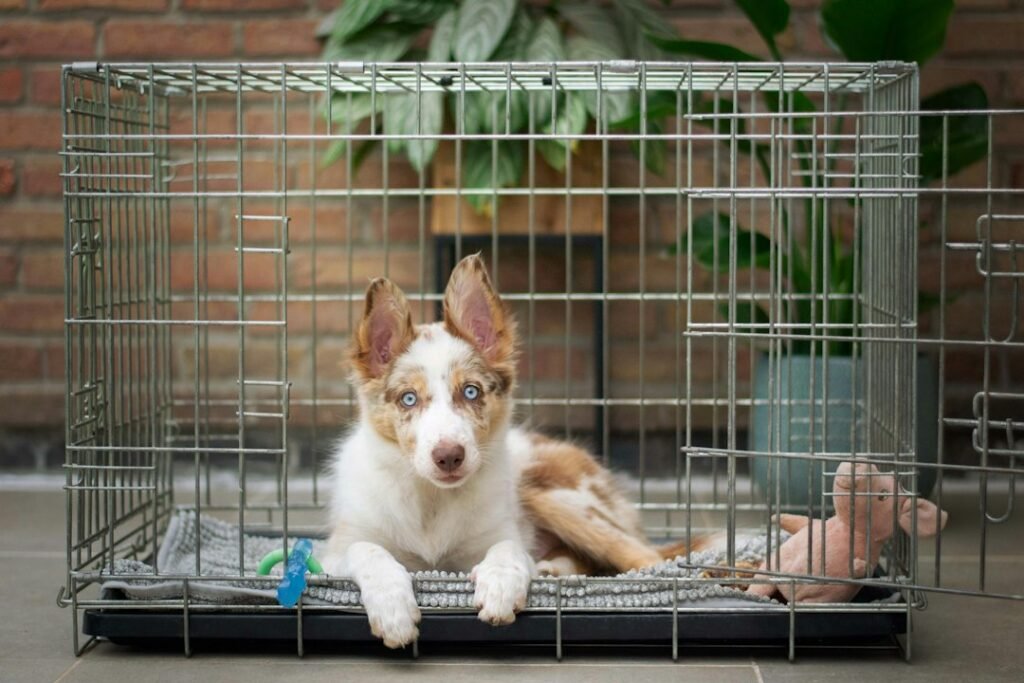
A predictable puppy crate training schedule helps a young dog learn that the crate is a safe place to rest—not a place for punishment or long-term confinement. The best routine combines short positive sessions, regular toilet breaks, play, meals and supervised time outside the crate.
Every puppy is different. Age, health, previous experience and how recently they went to the toilet all affect how long they can comfortably settle. Use this schedule as a flexible starting point.
Before You Start: Set Up the Crate
Choose a crate that lets your puppy stand, turn around and lie down comfortably. Add washable bedding only if your puppy does not chew or swallow fabric. Keep the crate in a family area during the day.
- Keep the door open during first introductions.
- Toss treats or feed meals near the crate, then just inside it.
- Let your puppy enter and leave freely before practising closed-door sessions.
- Remove collars or harnesses that could catch on the crate.
A Sample Puppy Crate Training Schedule
| Routine point | What to do | Goal |
|---|---|---|
| After waking | Take puppy outside for a toilet break. | Build a predictable toilet routine. |
| After breakfast | Offer gentle play or training, then another toilet opportunity. | Pair routines with breaks. |
| Morning rest | Invite puppy into the crate with a safe chew or food toy; begin with a few calm minutes. | Make crate time rewarding. |
| After each nap | Go outside promptly, then allow supervised exploration. | Prevent avoidable accidents. |
| Afternoon | Repeat short crate practice after play and a toilet break. | Gradually build comfort. |
| Evening | Keep activity calm, offer a final toilet break and settle the crate near you if needed. | Create a reassuring bedtime routine. |
How Long Should a Puppy Stay in the Crate?
Start with seconds or a few minutes while you remain nearby, then increase duration gradually if your puppy stays relaxed. Very young puppies need frequent toilet breaks and should not be expected to hold their bladder for long periods. A crate is not a substitute for interaction, exercise or supervision, and puppies should not be confined for an entire workday.
If your puppy cries, consider whether they need the toilet, are uncomfortable, frightened or have been left too long. Do not ignore signs of panic or distress. Make the next session easier and shorter.
Common Crate Training Mistakes
- Moving too quickly: Increase time only when your puppy is comfortable.
- Using the crate as punishment: Keep it associated with rest, food and safety.
- Skipping toilet breaks: Take puppies out after waking, eating, drinking, playing and before settling.
- Leaving unsafe items inside: Choose bedding and chews appropriate for your puppy and supervise new items.
- Expecting one timetable to fit every puppy: Adjust the routine to the individual dog.
When to Get Extra Help
Persistent panic, frantic escape attempts, heavy drooling or self-injury are not ordinary training setbacks. Stop the session and speak with your veterinarian or a qualified, reward-based dog trainer. A gradual plan may be needed for separation-related distress.
Frequently Asked Questions
Should I put my puppy in the crate during the day?
Short positive rest periods can be part of a daytime routine. Balance them with toilet breaks, play, training, social contact and supervised freedom.
Should I cover the puppy crate?
Some puppies settle with a partial cover, while others prefer an open view. Ensure airflow, keep fabric out of reach and stop if your puppy chews or becomes uncomfortable.
What if my puppy cries in the crate?
Check for toilet needs, discomfort, fear or excessive duration. Return to an easier step and reward calm voluntary entry. Do not leave a distressed puppy to panic.
Can I crate my puppy overnight?
A crate can support overnight sleep when introduced positively, but young puppies may still need nighttime toilet trips. Keep the crate close enough to hear and respond.
Build a Routine Your Puppy Can Trust
Successful crate training is gradual: make the crate inviting, practise brief sessions, reward relaxed behaviour and respond to your puppy’s needs. For more guidance, read our puppy socialization checklist and leave-it training guide.
Educational information only. For individual behaviour, health or welfare concerns, consult your veterinarian or a qualified reward-based trainer.