
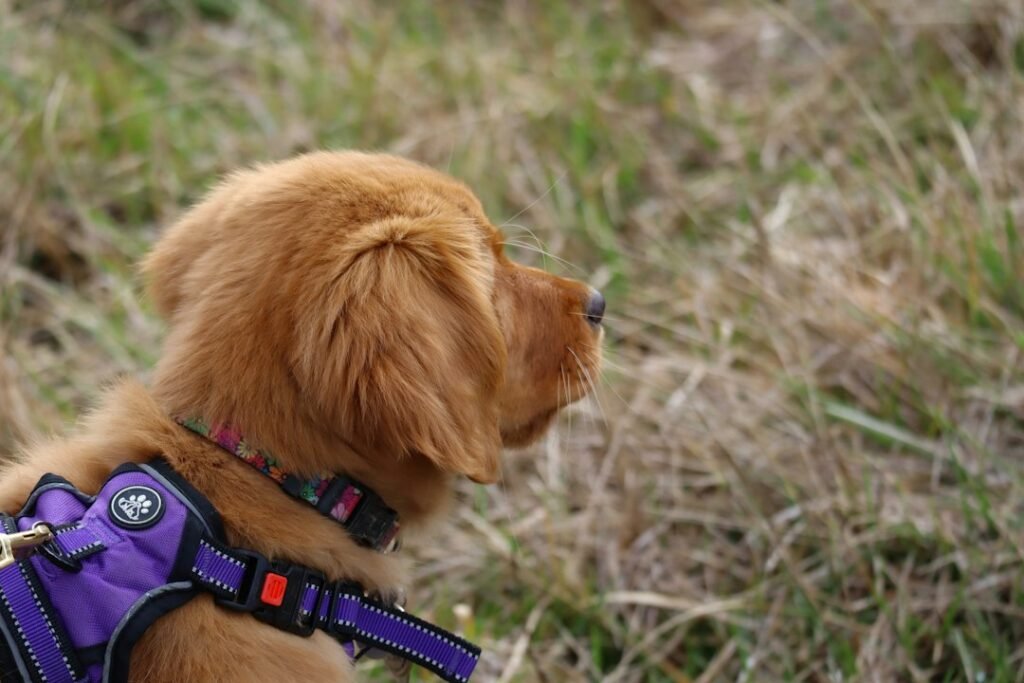
Choosing a puppy harness is about more than picking a cute colour or the size printed on the label. The right harness should fit your puppy’s changing body, stay secure during ordinary movement, and allow the shoulders and front legs to move naturally. A harness that is too loose may slip off; one that is too tight can rub or restrict movement.
This guide explains how to choose a puppy harness, take useful measurements, compare common styles, and check the fit before your first walk. Always follow the instructions for the specific harness you buy, because designs and sizing charts differ between brands.
1. Why Consider a Harness for Your Puppy?
A harness attaches the leash around the chest and body rather than relying only on the neck. For some puppies, this can make leash handling more comfortable and reduce direct pressure on the throat if they suddenly pull. It can also make it easier to guide a puppy who is still learning to walk calmly.
A harness does not teach loose-leash walking by itself. Pair it with short, reward-based practice and let your puppy learn at a comfortable pace. Our guide to leash training a puppy explains how to build that skill gradually.
2. Measure Your Puppy Before Buying
Do not choose a harness by weight or breed alone. Puppies of the same breed can have different proportions, and each manufacturer may use its own size chart. Use a soft measuring tape and take measurements while your puppy is standing naturally.
Measure chest girth
Wrap the tape around the widest part of the rib cage, usually just behind the front legs. Keep it comfortably close to the coat without pulling it tight. This measurement is often the main number used in harness size charts.
Measure the neck if the brand asks for it
Some harness designs also require a measurement around the base of the neck where it meets the shoulders. Check the manufacturer’s diagram so you measure the correct location for that particular style.
Write down the measurements and check the brand chart
Compare your numbers with the exact product’s sizing chart rather than assuming that a small or medium in one brand will fit the same in another. If your puppy is between sizes, check the adjustment range and the maker’s advice before choosing. The American Kennel Club’s dog-gear measuring guide explains how to measure chest girth and neck circumference.
3. Understand the Main Puppy Harness Styles
Back-clip harness
The leash attaches to a ring on the puppy’s back. This style is usually straightforward to put on and can work well for puppies who are already comfortable walking without pulling hard. It is not a substitute for leash training, and some dogs may find it easier to lean into the leash.
Front-clip harness
The leash attaches at the front of the chest. When a dog moves ahead, the leash angle can help turn the body back toward the handler. Fit and handling still matter: a front clip should not press across the shoulder joints or interfere with a natural stride.
Dual-clip harness
A dual-clip design has attachment points at the front and back. It offers options as your puppy’s walking skills develop. Use the attachment recommended by the manufacturer and avoid using two leash points together unless the product instructions specifically allow it.
Step-in or over-the-head design
A step-in harness lets the puppy place their front paws through openings before it is fastened. An over-the-head design slips on from above. Neither style is automatically better: choose the one your puppy can wear calmly and that can be adjusted securely without pinching.
4. How to Check Whether a Puppy Harness Fits
After fastening the harness according to its instructions, check it while your puppy is standing and moving. A good fit should be secure without digging into the skin or limiting normal movement.
- Check the straps: They should sit flat and should not twist, bunch up, or press into the throat.
- Check the armpits: The chest or girth strap should not rub directly behind the front legs.
- Check shoulder movement: Let your puppy take several natural steps. The harness should not restrict the front legs or change the way your puppy walks.
- Check security: Gently test whether the harness can slide over the head or slip backward. It should remain in place without being painfully tight.
- Check the skin and coat: After a short wear, look for redness, rubbed patches, or signs that your puppy is uncomfortable.
Many fitting guides use a two-finger check as a starting point, but strap shape and manufacturer instructions vary. The AKC guide to choosing and fitting a dog harness recommends checking security, freedom of movement, and areas where rubbing may occur. If you cannot get a secure, comfortable fit, try a different size or design rather than forcing the adjustment.
5. Help Your Puppy Get Used to the Harness
Some puppies accept new equipment immediately; others need several short introductions. Keep the first sessions relaxed and stop before your puppy becomes worried.
- Let your puppy investigate: Place the harness on the floor and reward calm sniffing or looking at it.
- Build a positive association: Hold the harness near your puppy, offer a treat, and put it away. Repeat for a few brief sessions.
- Practise the fitting movement: Gently touch the harness to your puppy’s shoulder or chest, reward, and remove it. Gradually work toward fastening it.
- Start with a short indoor wear: Fasten it correctly for a brief period while offering praise or a small treat. Supervise throughout.
- Add the leash indoors: Let your puppy walk a few steps with a lightweight leash attached while you supervise. Do not leave a puppy unattended while wearing a harness or attached leash.
- Try a quiet outdoor area: Once your puppy is relaxed indoors, practise in a calm, low-distraction place.
If your puppy freezes, scratches frantically, tries to escape, or shows clear distress, pause and return to an easier step. Never drag or force a puppy into the harness. If touching the neck, chest, or shoulders seems painful, ask your veterinarian to check for a physical cause.
6. Recheck the Fit as Your Puppy Grows
Puppies can outgrow equipment quickly. Check the fit before each walk and take fresh measurements regularly during growth. Recheck after a noticeable change in weight, coat length, or body shape, and whenever you change harness brands or styles.
Look for frayed webbing, loose stitching, damaged buckles, and bent or corroded rings. Replace a harness if any part is weakened or the fasteners no longer hold securely. Keep the harness clean and dry according to the care label.
7. Common Puppy Harness Mistakes to Avoid
- Buying by age, breed, or weight without checking measurements.
- Assuming the same size will fit across different brands.
- Leaving straps loose enough for the puppy to back out of the harness.
- Tightening straps until they rub or restrict movement.
- Choosing a design that presses into the armpits or across the shoulders.
- Using the harness as a car restraint unless it is specifically designed and tested for vehicle travel.
- Leaving a harness on an unattended puppy, where it could snag on furniture, a crate, or another object.
Frequently Asked Questions
Should a puppy wear a collar or a harness?
They serve different purposes. A properly fitted collar can hold identification tags, while a harness provides another way to attach a leash. Ask your veterinarian or a qualified trainer what is suitable for your puppy’s size, health, and walking behaviour.
How tight should a puppy harness be?
It should be snug and secure without pinching, rubbing, or limiting movement. Use the manufacturer’s fitting instructions and check the harness at several points while your puppy stands and walks.
Can my puppy wear a harness all day?
Usually there is no need to leave a walking harness on all day. Remove it when it is not needed, especially during unsupervised rest, crate time, or play where it could catch on something.
When should I replace a puppy harness?
Replace it when your puppy outgrows the adjustment range, when it no longer fits securely, or when straps, stitching, buckles, or rings are damaged.
Can I use a walking harness in the car?
Do not assume a walking harness is a vehicle restraint. Use a pet travel system specifically designed for vehicle use and follow its safety instructions. Our article on helping a puppy get comfortable with car rides covers gradual car familiarisation.
Final Thoughts
The best puppy harness is one that matches your puppy’s measurements, stays secure, and allows comfortable movement. Measure carefully, compare the specific brand’s chart, introduce the harness in small positive steps, and check the fit as your puppy grows. A comfortable harness can support your training routine, while patient practice teaches your puppy to enjoy walking beside you.
This article is general pet-care information, not a substitute for veterinary advice. If your puppy has pain, skin irritation, breathing difficulty, or persistent distress when wearing equipment, remove the harness and consult your veterinarian.