
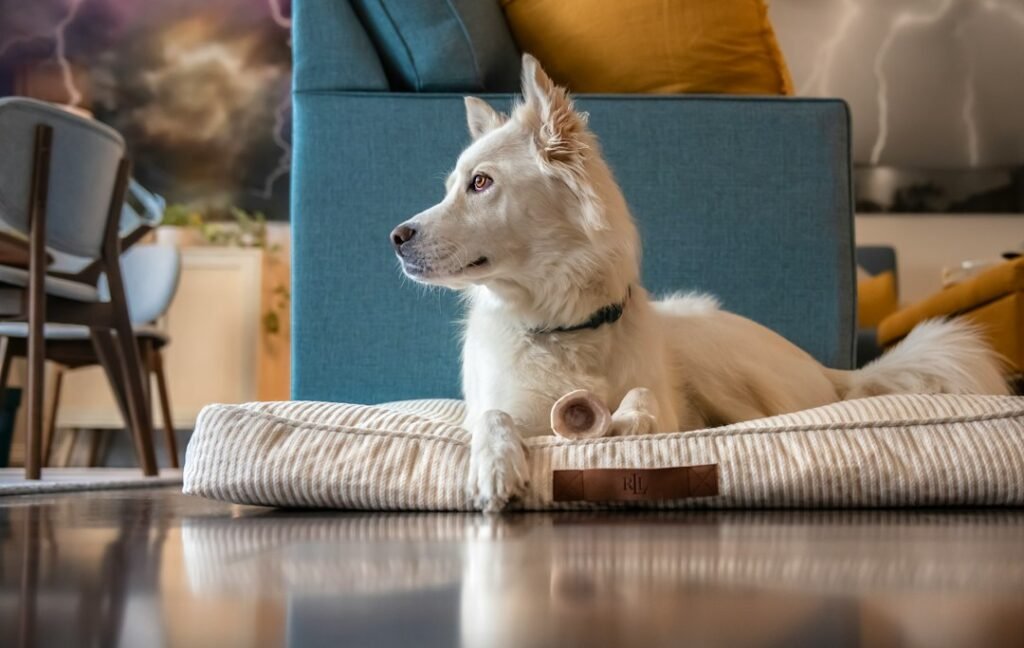
Teaching a puppy to settle on a mat or bed gives them a clear place to relax while family life carries on. It is not about forcing a puppy to stay still; it is about rewarding calm choices and building the skill gradually.
What Does “Settle” Mean?
A settled puppy can lie comfortably in one spot, loosen their body, and rest without constant attention. Start with short, easy sessions when your puppy has had a toilet break and some gentle activity—not when they are overtired or bursting with energy.
What You’ll Need
- A comfortable non-slip bed or mat
- Small, soft training treats or part of your puppy’s daily food
- A quiet area with limited distractions
- A few minutes for several short practice sessions
Step-by-Step: Teach Your Puppy to Settle
1. Make the mat rewarding
Place the mat on the floor and let your puppy investigate it. Reward looking at it, stepping onto it, or sniffing it. Keep your voice calm and avoid pushing your puppy onto the mat.
2. Reward four paws on the mat
When your puppy stands on the mat, calmly place a treat between their front paws. Repeat a few times, then pause so they can choose to remain there or step away.
3. Capture a sit or down
If your puppy sits or lies down naturally, quietly deliver a treat. Reward relaxed behaviour rather than repeatedly asking for commands. Feed low, near the mat, so your puppy does not need to jump up to collect each reward.
4. Add a release cue
After a few seconds, say a consistent release word such as “okay” and toss a treat away from the mat. This makes it clear that the exercise has ended and your puppy is free to move.
5. Build duration slowly
Gradually wait one or two seconds longer between rewards while your puppy remains relaxed. Increase duration before adding major distractions. If your puppy gets up repeatedly, make the next attempt easier.
6. Practise during everyday routines
Use the mat while you read, work at a desk, or prepare a meal. Start with very short periods and supervise closely. Give puppies regular toilet breaks, play, sleep, and social contact; a mat should never be used as punishment or isolation.
Common Mistakes to Avoid
- Expecting too much too soon: young puppies may manage only a few seconds at first.
- Repeating “stay” constantly: reward the behaviour you want instead of adding pressure.
- Practising when your puppy is overexcited: meet basic needs first, then train in a quieter moment.
- Using the bed only when you leave: make it a positive place during normal, supervised family time too.
- Forcing the position: let your puppy choose to lie down and reward that choice.
A Simple Daily Practice Plan
| Session | Goal | Approximate time |
|---|---|---|
| Morning | Explore mat and reward stepping on | 2 minutes |
| Afternoon | Reward a sit or down | 2–3 minutes |
| Evening | Practise brief calm periods nearby | 3–5 minutes |
These are flexible examples, not targets every puppy must meet. End while your puppy is still succeeding.
FAQs
How long does it take to teach a puppy to settle?
It varies with age, temperament, experience, and the environment. Many short, positive sessions are more useful than one long session. Expect progress to be gradual.
Should I use a crate instead of a mat?
A mat teaches relaxation in an open space, while a properly introduced crate can provide a separate resting area. They are different skills; see our puppy crate-training guide for gradual, positive crate introduction.
What if my puppy keeps biting the bed?
Redirect them to a safe chew and reward calm interaction with the mat. Supervise to prevent chewing or swallowing bedding, and choose a safer setup if your puppy persistently shreds fabric.
Keep Building Good Habits
Calmness is easier to learn when a puppy also gets adequate sleep, age-appropriate play, and predictable routines. Our guides on puppy sleep needs, positive puppy socialisation, and puppy-proofing your home can help you create a comfortable learning environment.
For more evidence-based training guidance, consult the American Kennel Club’s dog-training resources. Use reward-based methods, keep sessions comfortable, and ask a qualified trainer or veterinarian for help if your puppy shows persistent fear or distress.