
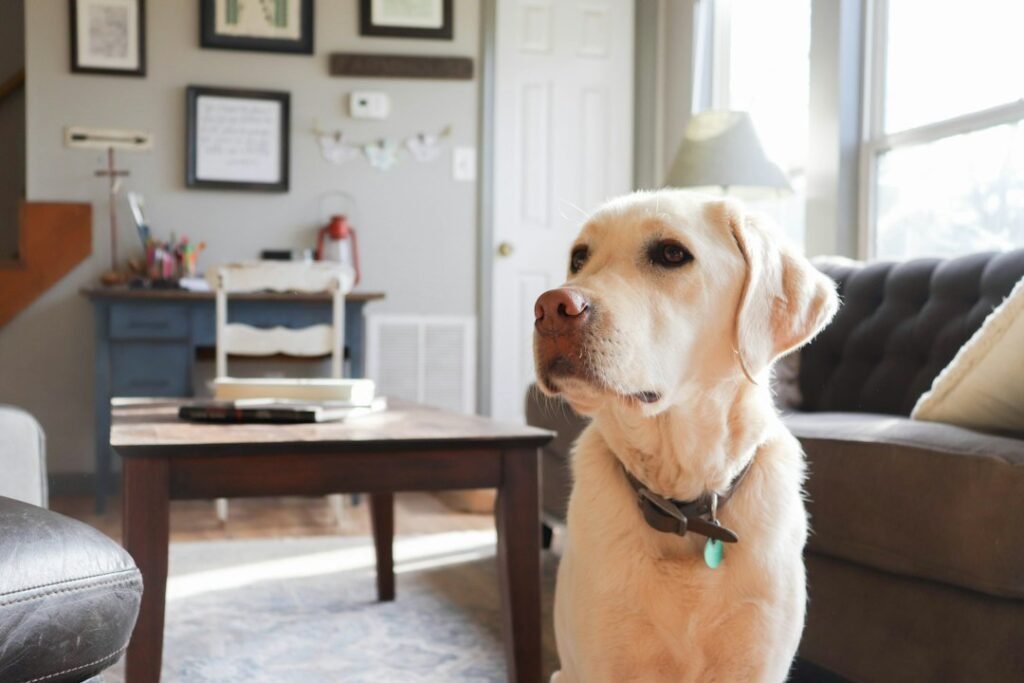
Bringing a puppy home is exciting, but curious noses and tiny teeth can quickly find hazards adults overlook. Puppy-proofing your home helps prevent avoidable accidents while giving your new companion a safe place to explore. Use this room-by-room checklist before your puppy arrives, then repeat it as your dog grows.
Why Puppy-Proofing Matters
Puppies investigate the world by sniffing, chewing, climbing and sometimes swallowing things they should not. Electrical cords, medicines, cleaning products, small objects and certain foods can cause serious harm. A safe setup works alongside supervision and training; it does not replace either one.
1. Make the Living Room Safer
- Move electrical cords behind furniture or use secure cord covers.
- Keep remote controls, batteries, coins, toys with small parts and children’s items out of reach.
- Check houseplants against a reliable pet-toxicity list and move unsafe plants where your puppy cannot access them.
- Secure unstable lamps, shelves and décor that could fall if bumped.
- Use a sturdy pet gate to limit access while your puppy learns household rules.
2. Puppy-Proof the Kitchen
Store food in closed cupboards or sealed containers, and keep rubbish in a lidded bin. Chocolate, grapes and raisins, onions, xylitol-sweetened products and alcohol can be dangerous to dogs. Keep knives, skewers, hot pans and cleaning supplies inaccessible, and never leave a puppy unattended near a hot oven or dishwasher.
3. Check the Bathroom and Laundry Area
- Keep medicines, vitamins, razors and toiletries in closed cabinets.
- Store detergent pods, bleach and other cleaning products securely.
- Keep toilet lids closed and bathroom bins covered.
- Check washing machines and dryers before each use; puppies can hide inside open appliances or laundry piles.
4. Create a Safe Sleeping and Resting Space
Set up a properly sized crate or puppy pen in a calm area, with comfortable bedding and access to fresh water as appropriate. Remove collars or harnesses when a puppy is resting in a crate if they could snag. Introduce the space positively with treats and short, supervised sessions. For more help with settling in, visit our puppy help resources.
5. Secure Doors, Windows and Outdoor Areas
Use gates or closed doors to prevent escapes, and make sure window screens are secure. Check fences for gaps and remove access to garden chemicals, sharp tools, toxic plants and standing water. Supervise outdoor time, even in a fenced yard. Keep your puppy on a lead near driveways and roads.
6. Remove Small Objects and Chewing Hazards
Get down to puppy eye level and scan the floor for socks, string, hair ties, children’s toys, charging cables and anything small enough to swallow. Choose size-appropriate chew toys that cannot easily break into pieces, and inspect them regularly. Rotate toys to keep your puppy interested in safe options.
7. Build Safety Into Training
Reward your puppy for choosing toys instead of household objects, and teach simple cues such as “leave it” and “drop it” using positive reinforcement. Keep sessions short and consistent. Our dog training guides can help you build these habits, while the dog care section covers everyday wellbeing.
Quick Puppy-Proofing Checklist
- ☐ Cords and chargers are inaccessible.
- ☐ Medicines, chemicals and human food are secured.
- ☐ Small objects and unsafe toys are picked up.
- ☐ Windows, doors, gates and fences are secure.
- ☐ Plants have been checked for pet safety.
- ☐ A comfortable resting area and safe chew toys are ready.
- ☐ The household knows which areas are off-limits.
When to Contact a Veterinarian
If you suspect your puppy has swallowed medication, a chemical, a battery, a toxic food or another hazardous object, contact a veterinarian or animal poison service immediately. Do not wait for symptoms and do not induce vomiting unless a veterinary professional tells you to do so.
Final Thoughts
Puppy-proofing is an ongoing task, not a one-time job. Recheck your home as your puppy becomes taller, stronger and more curious. Combine a safe environment with supervision, positive training and routine veterinary care to help your puppy settle in confidently.
For additional general safety guidance, see the ASPCA Animal Poison Control resources.