
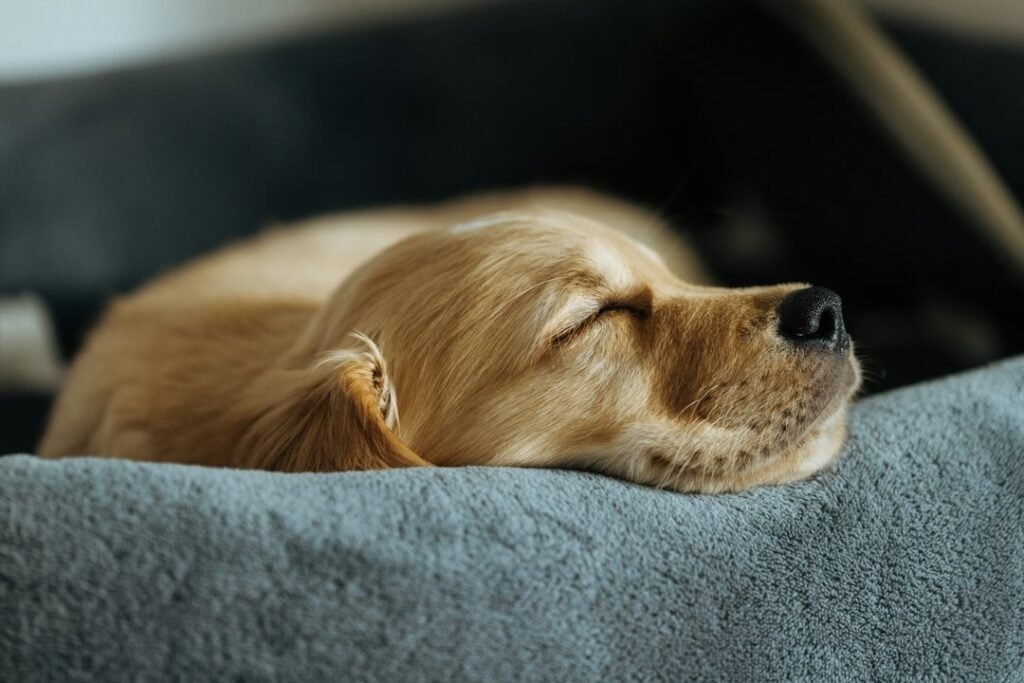
Sleep is a major part of healthy puppy development. Puppies use rest to recover from play, adapt to new experiences, and learn. If your puppy gets mouthy, restless, or unusually excitable, they may need a quiet break as much as they need activity.
How Much Sleep Do Puppies Need?
Many young puppies sleep roughly 18–20 hours in a 24-hour period, although individual needs vary by age, breed, activity, and health. As puppies grow, their sleep patterns gradually change. Rather than trying to enforce an exact number, watch your puppy’s behavior and provide frequent chances to rest.
Signs Your Puppy May Be Tired
- Repeated yawning or settling down during play
- Becoming unusually nippy, jumpy, or restless
- Difficulty responding to familiar cues
- Wandering away, whining, or struggling to settle
- Falling asleep soon after a busy activity
These signs can have other causes too, so consider the whole situation. If your puppy seems lethargic, is difficult to wake, or shows other signs of illness, contact your veterinarian.
Create a Comfortable Sleep Space
Choose a quiet, comfortable area away from heavy foot traffic. A washable bed or appropriately sized crate can help create a predictable resting spot. If you use a crate, introduce it gradually with rewards and never use it as punishment. Make sure your puppy can stand, turn around, and lie down comfortably, and follow age-appropriate guidance about overnight toileting.
Build a Simple Daily Rhythm
A flexible routine can alternate short periods of activity with rest:
- Wake up and go outside for a toilet break.
- Offer a meal according to your veterinarian’s or breeder’s feeding guidance.
- Provide a short play or training session suitable for your puppy’s age.
- Offer another toilet break, then a quiet nap.
- Repeat the cycle while adjusting to your puppy’s needs and household schedule.
Young puppies often need toilet breaks after waking, eating, drinking, and playing. Keep evenings calm, and take your puppy out just before bedtime.
Help Your Puppy Settle Without Forcing Sleep
Reduce noise and exciting play when your puppy is winding down. Offer a safe, age-appropriate chew toy if it helps them relax, and reward calm behavior. If your puppy cries, first consider whether they need the toilet, feel uncomfortable, or are frightened. Avoid punishment for normal distress; use gradual, positive training to build confidence.
Balance Rest with Exercise and Enrichment
Rest is important, but puppies also need gentle play, exploration, and short positive training sessions. Avoid intense or repetitive exercise that is unsuitable for their age and development. See our puppy exercise guide for age-aware activity tips, and prepare a safer environment with our puppy-proofing checklist.
When to Ask Your Veterinarian
Contact your veterinarian if sleep patterns change suddenly, your puppy seems persistently uncomfortable, has trouble breathing, is difficult to wake, or has a reduced appetite or other symptoms. A veterinarian can help distinguish normal sleep needs from a medical concern.
Key Takeaway
Healthy puppy sleep comes from a safe resting space, predictable routines, suitable activity, and patience. Let your puppy rest when tired and adjust the routine as they grow. Every puppy is different, so use behavior and veterinary advice rather than a rigid timetable.