
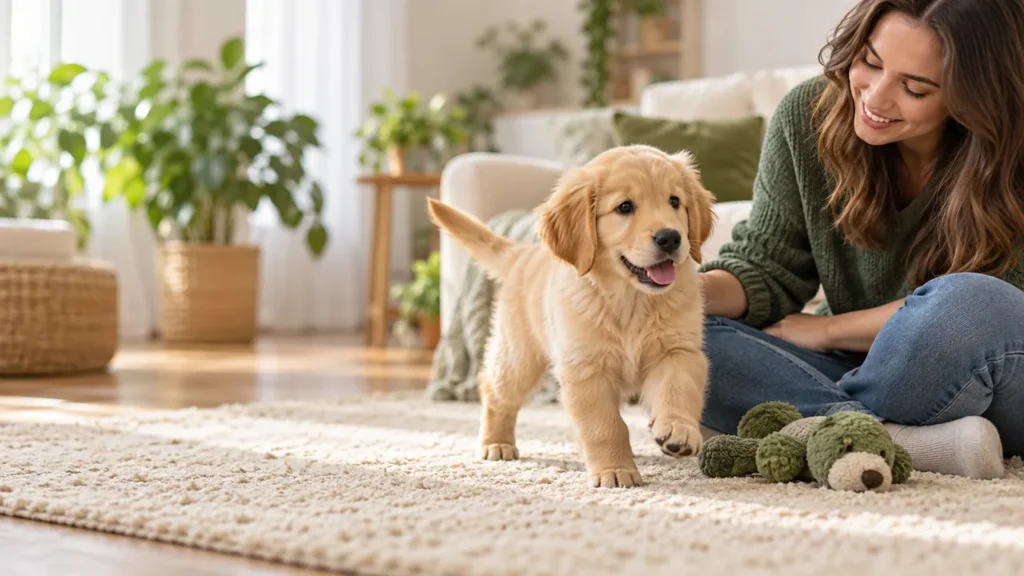
Puppy house training is a learning process built on timing and supervision. Instead of waiting for accidents, take your puppy to the toilet area after waking, eating, drinking, and active play, and often while they are awake. Young puppies vary, so use your puppy’s behavior and veterinarian’s advice rather than relying on a rigid age-based rule.
Reward the right place
Stay with your puppy and quietly reward them soon after they finish in the chosen spot. Then allow a little safe play or exploration. Indoors, keep the puppy close enough to supervise or use a puppy-safe pen for short periods. If you see sniffing, circling, or sudden wandering, calmly head outside.
Handle accidents without punishment
If you find an accident later, clean it thoroughly and adjust the schedule or supervision. Do not scold or rub the puppy’s nose in it; that can teach the puppy to hide rather than where to go. Record meals, naps, and toilet trips for a few days to spot patterns.
The ASPCA offers a practical overview of house-training dogs and puppies. Our first-week puppy plan and 90-day puppy planner help keep routines in one place.
If a previously reliable puppy suddenly has frequent accidents or seems unwell, contact your veterinarian.
General guidance only. A veterinarian can assess urinary or digestive symptoms.