
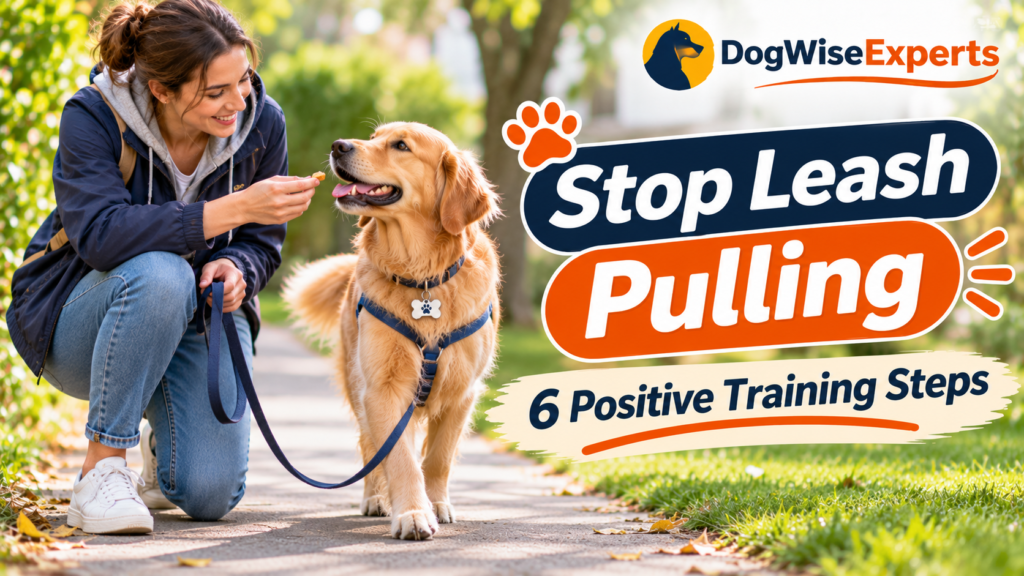
Walks should give your dog time to explore, sniff and enjoy the outdoors, but constant pulling can make outings difficult and uncomfortable. If you are wondering how to stop a dog from pulling on the leash, the most effective approach is to teach a clear walking skill through consistency, rewards and manageable practice. The goal is not to make your dog walk rigidly beside you every second; it is to help them move with a loose leash while still having opportunities to explore safely.
Why Do Dogs Pull on the Leash?
Dogs often move faster than people and may pull because they want to reach an interesting smell, greet another person or dog, or explore a new place. If pulling gets them to the destination, the behaviour can become rewarding and repeat over time. Puppies may also need practice learning how to walk calmly while wearing a harness or collar.
Fear, frustration, excitement and discomfort can also affect leash behaviour. A dog that suddenly starts pulling, freezes, lunges or tries to escape may be reacting to something in the environment or experiencing pain. Consider the context rather than assuming every dog pulls for the same reason.
Choose Comfortable, Secure Walking Equipment
Use a well-fitted flat collar or a comfortable, properly fitted harness attached to a standard fixed-length leash. The equipment should allow normal movement and breathing without rubbing or restricting the shoulders. Check the fit regularly, especially for growing puppies. Avoid equipment that causes pain, choking or fear, including leash jerks and punitive corrections.
A front-clip harness may help some handlers manage a strong dog, but fit and individual response matter. No harness teaches loose-leash walking by itself. If you are unsure what is suitable for your dog’s size, health or behaviour, ask your veterinarian or a qualified reward-based trainer.
How to Stop a Dog from Pulling on the Leash: 6 Steps
1. Practise indoors first
Begin in a quiet room or enclosed area with few distractions. Let your dog wear the walking equipment for short, positive sessions. Hold the leash comfortably and reward your dog when they stand or move near you with slack in the leash. Keep sessions brief and finish before your dog becomes frustrated.
2. Reward the position you want
Take one or two steps. When your dog moves with you and the leash stays loose, mark the moment with a consistent word such as “yes” and offer a small treat near your leg. Repeat a few steps at a time. Gradually increase the number of steps between rewards as your dog understands the exercise.
3. Stop moving when the leash becomes tight
If your dog reaches the end of the leash, stop calmly rather than pulling back or dragging them. Wait for your dog to turn towards you or create slack, then reward and continue. If your dog is too excited to respond, increase distance from the distraction or return to an easier environment.
4. Change direction before pulling builds
In a safe, low-distraction space, gently change direction when your dog moves ahead. Reward them for noticing and coming with you. This teaches your dog to check in and pay attention to your movement. Do not spin suddenly, yank the leash or use direction changes to frighten your dog.
5. Use sniffing as a reward
Sniffing is an important part of a dog’s walk. Let your dog investigate a tree or patch of grass as a reward for walking with a loose leash for a short stretch. You can use a cue such as “go sniff” to signal that exploration time is available. This makes the walk more rewarding without allowing pulling to control the pace.
6. Practise around distractions gradually
Once your dog can walk comfortably in a quiet area, practise in slightly busier places. Begin far enough from other dogs, traffic or people that your dog can still respond to you. Reward calm attention and loose-leash steps. If your dog starts barking, lunging or pulling hard, increase distance and make the next session easier.
How Long Does Leash Training Take?
There is no fixed timeline. Progress depends on your dog’s age, previous walking experience, motivation, environment and how consistently the training is practised. Some dogs improve in a few weeks, while others need longer and benefit from professional support. Short, successful sessions are generally more useful than one long walk filled with repeated pulling.
Common Leash Training Mistakes to Avoid
- Pulling back against your dog: this can increase pressure and frustration rather than teach a new skill.
- Allowing pulling to reach every destination: if a tight leash always moves the walk forward, pulling may be reinforced.
- Starting in a busy place: practise first where your dog can focus and succeed.
- Expecting a young puppy to walk for too long: keep outings and training appropriate for age and development.
- Using pain or intimidation: avoid leash jerks, choke chains and other methods designed to cause discomfort or fear.
- Forgetting sniff breaks: walks should provide safe exploration as well as training.
What If Your Dog Lunges at Other Dogs or People?
Lunging is different from ordinary leash pulling and may be related to fear, frustration or overexcitement. Do not force greetings or bring your dog closer to the trigger to “get used to it.” Create distance, use secure equipment and reward calm observation from a distance where your dog can still think and respond. If lunging is intense, persistent or creates a safety risk, seek help from a qualified reward-based behaviour professional and discuss the behaviour with your veterinarian.
Frequently Asked Questions
Should I stop walking when my dog pulls?
Stopping calmly when the leash becomes tight can help teach that pulling does not move the walk forward. Reward your dog as soon as they create slack or check back with you. If the environment is too exciting, move farther away and practise somewhere easier.
Is a harness better than a collar for a dog that pulls?
A well-fitted harness can be a comfortable option for many dogs, but the best choice depends on fit, health and behaviour. Equipment alone will not teach loose-leash walking. Ask a professional to check the fit if your dog pulls strongly or has mobility or respiratory concerns.
Can I train a dog that has pulled on the leash for years?
Yes, adult dogs can learn new walking habits. Start in a low-distraction place, reward small improvements and build difficulty gradually. Older habits may take time to change, so consistency and realistic expectations are important.
How long should a loose-leash training session last?
Begin with a few minutes or a short stretch of the walk, depending on your dog’s attention and comfort. Stop while your dog is still succeeding. You can add more practice gradually and balance training with relaxed sniffing and age-appropriate exercise.
Make Walks More Relaxed One Step at a Time
Teaching a dog to walk on a loose leash takes patience, clear rewards and practice in environments where your dog can succeed. Choose comfortable equipment, reward the behaviour you want, pause calmly when the leash tightens and allow regular sniff breaks. For a balanced routine, read our guide on how often to walk a dog. If pulling is sudden, extreme or linked to lunging and fear, seek veterinary or qualified behaviour support.
Disclaimer: This article is for general educational purposes and is not a substitute for veterinary advice or individual behavioural assessment.