
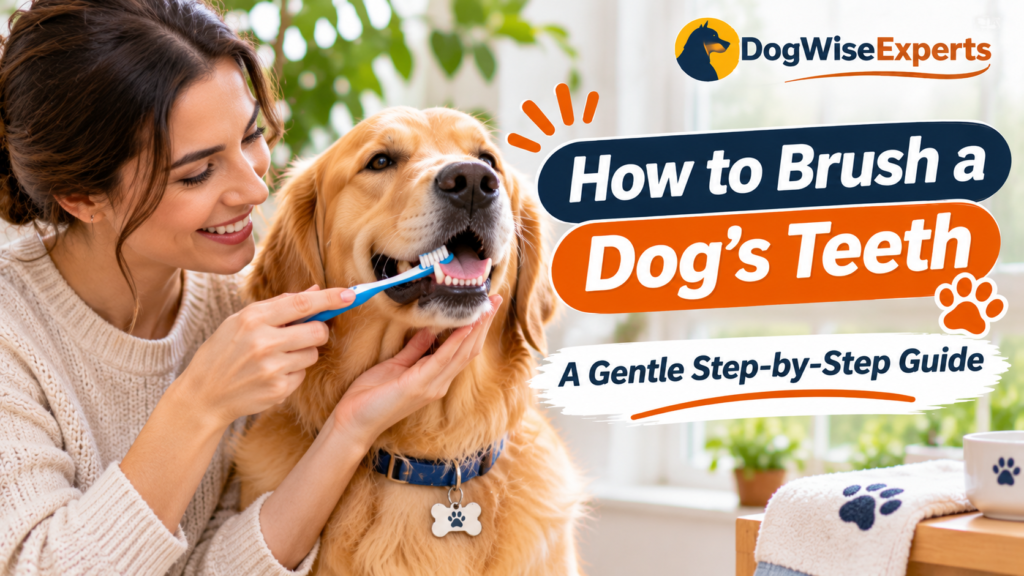
Dental care is an important part of your dog’s overall health, but toothbrushing can feel unfamiliar at first. The good news is that most dogs can learn to accept gentle mouth care when you introduce it gradually and make each session positive. This guide explains how to brush a dog’s teeth, which supplies to use, how often to brush and the signs that mean your dog needs a veterinary dental check.
Why Is Brushing Your Dog’s Teeth Important?
Plaque is a soft film of bacteria that builds up on teeth. If it is not regularly removed, it can harden into tartar and contribute to gum inflammation and periodontal disease. Dental problems can cause bad breath, discomfort and difficulty eating. Brushing helps remove plaque from accessible tooth surfaces, particularly along the gumline, and is an important part of preventive dental care.
Toothbrushing does not replace professional veterinary dental examinations or treatment. Some disease develops below the gumline, where you cannot see or reach it at home. Your veterinarian can assess your dog’s mouth and recommend an appropriate dental-care plan.
What You Need to Brush a Dog’s Teeth
- Dog toothbrush: choose a soft-bristled brush or a pet finger brush that fits your dog’s mouth and your handling ability.
- Dog toothpaste: use toothpaste specifically formulated for dogs and follow the product directions.
- Small rewards: keep treats nearby to reinforce calm cooperation before and after practice.
- A quiet place: choose a familiar area where your dog can stand or sit comfortably without being restrained forcefully.
Never use human toothpaste unless your veterinarian specifically directs you to a suitable product. Some human formulas contain ingredients such as xylitol that are dangerous to dogs, and fluoride products are not intended to be swallowed. Do not use baking soda, household cleaning products or essential oils as substitutes for pet toothpaste.
How to Brush a Dog’s Teeth: Step-by-Step
1. Let your dog get comfortable with mouth handling
Start when your dog is relaxed. Briefly touch the side of the muzzle, reward, and stop. Over several short sessions, progress to gently lifting the lip for a second or two. Keep your movements slow and avoid prising the mouth open. If your dog turns away, freezes, growls or appears worried, pause and make the next attempt easier.
2. Introduce the dog toothpaste
Place a tiny amount of dog toothpaste on your finger and allow your dog to lick it if the label permits. This helps them become familiar with the flavour and smell. Do not smear it around the mouth or force your dog’s lips apart. Reward calm interest and finish before your dog becomes uncomfortable.
3. Start with a few teeth
When your dog accepts gentle lip lifting, use your finger or a soft pet brush to touch the outer surface of one or two teeth. Focus on the outside surfaces, especially near the gumline. You usually do not need to force the mouth open because the tongue helps clean some inner surfaces, while plaque commonly accumulates on the outer surfaces.
4. Use small, gentle movements
Angle the bristles gently toward the gumline and use short, light strokes. Do not scrub hard or press into the gums. Work gradually along the cheek-side surfaces of the teeth, giving your dog breaks and rewards as needed. Stop if you see bleeding, pain or strong resistance.
5. Build up to a complete routine
Add a few more teeth as your dog becomes comfortable, until you can brush the accessible outer surfaces throughout the mouth. A full session should remain calm and brief. If your dog only tolerates a few seconds at first, that is a useful starting point—progress over time rather than forcing completion.
How Often Should You Brush Your Dog’s Teeth?
Daily brushing is generally recommended because plaque forms continuously and regular removal helps limit its build-up. If daily brushing is not yet realistic, establish a consistent routine and ask your veterinarian what additional dental-care options are suitable. Dental chews and diets may support oral care for some dogs, but they are not a direct replacement for brushing or professional assessment.
What If Your Dog Refuses Toothbrushing?
Do not pin your dog down, pry their jaws open or punish them for resisting. Go back to an easier step: touching the muzzle, briefly lifting a lip or letting them taste the toothpaste. Keep practice sessions very short and end while your dog is still relaxed. A reward-based trainer or veterinary team can help you build a cooperative-care routine.
If your dog suddenly refuses mouth handling after previously accepting it, consider pain as a possible reason. Broken teeth, inflamed gums, oral injury and other problems can make brushing uncomfortable. Arrange a veterinary examination instead of trying to push through the resistance.
Signs Your Dog May Have a Dental Problem
Contact your veterinarian if you notice persistent bad breath, red or swollen gums, yellow or brown deposits, drooling, bleeding, pawing at the mouth, dropping food, chewing on one side or reluctance to eat. Facial swelling, significant pain, a broken tooth or inability to eat warrants prompt veterinary attention.
Do not try to scrape tartar off with household tools or use human pain relief. A veterinary dental examination is the safest way to identify the cause and determine whether professional cleaning or treatment is needed.
Dental Care Tips for Puppies
Puppies can learn gentle mouth handling early, provided the experience is comfortable and age-appropriate. Begin by briefly touching the muzzle and lips, then reward. Introduce a puppy-safe toothbrush and dog toothpaste gradually. Teething may make gums sensitive, so keep sessions especially gentle and stop if your puppy seems sore. For more on this stage, read our guide to the puppy teething timeline.
Frequently Asked Questions
Can I use human toothpaste on my dog?
No. Use toothpaste made for dogs. Human toothpaste may contain ingredients that are unsafe if swallowed, and dogs generally swallow rather than spit out toothpaste. Ask your veterinarian if you are unsure which product to choose.
Do I need to brush the inside of my dog’s teeth?
Start with the outer surfaces, especially along the gumline, where plaque commonly accumulates. Do not force your dog’s mouth open to reach inner surfaces. Your veterinarian can demonstrate a safe technique suited to your dog’s mouth and temperament.
What if my dog’s gums bleed when I brush?
Stop brushing the affected area and contact your veterinarian for advice. Bleeding may be related to gum inflammation, injury or brushing pressure. Do not continue scrubbing in an attempt to remove deposits.
Are dental chews enough instead of brushing?
Some appropriately selected dental products can help reduce plaque or tartar, but effectiveness varies. Choose products suitable for your dog’s size and chewing style, supervise use and ask your veterinarian for recommendations. They do not replace brushing and regular dental checks.
Make Dental Care a Calm Daily Habit
Learning how to brush a dog’s teeth is mainly about patience and consistency. Use a dog-specific toothbrush and toothpaste, introduce handling gradually, focus on gentle strokes near the gumline and reward your dog for cooperating. Daily brushing can help manage plaque, while veterinary dental checks remain essential for identifying problems that home care cannot address.
Disclaimer: This article is for general educational purposes and does not replace veterinary examination, diagnosis or treatment. Seek advice from your veterinarian about your dog’s individual dental health.