
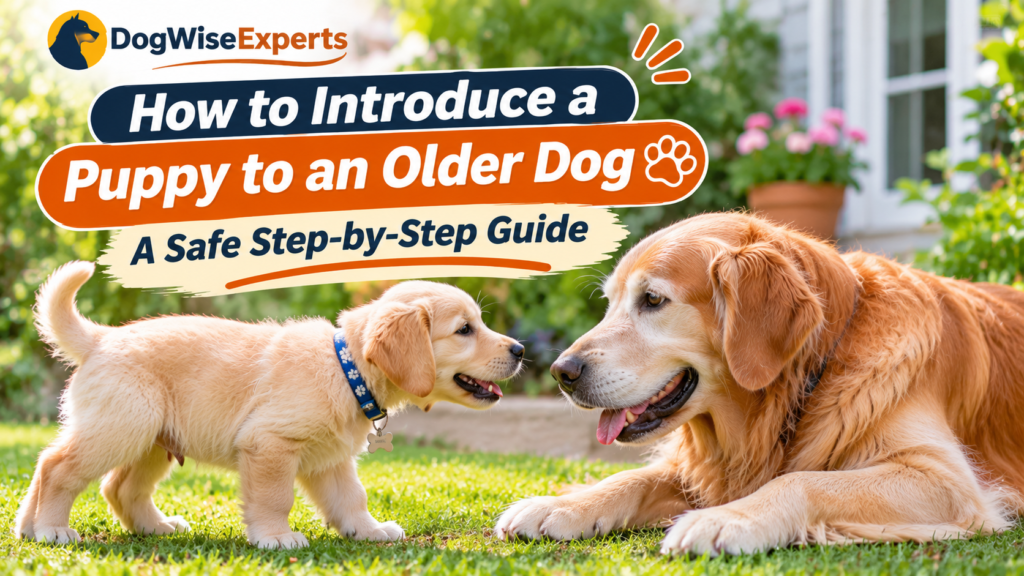
Bringing a new puppy into a home with an older dog can be exciting, but the first few meetings matter. A calm, gradual introduction gives both dogs time to understand each other without being pushed into close contact. If you are wondering how to introduce a puppy to an older dog, focus on safety, space, supervision and positive experiences rather than expecting them to become friends immediately.
Before You Bring the Puppy Home
Prepare separate areas so each dog has somewhere to rest without being disturbed. Set up individual food and water bowls, beds, toys and safe resting spaces. Remove high-value chews and favourite toys during the first meetings, as these can create avoidable competition. Make sure both dogs are healthy, appropriately vaccinated for their circumstances and up to date with parasite prevention as advised by your veterinarian.
Think about the older dog’s temperament, mobility and health. A senior dog with arthritis, hearing loss or pain may find a lively puppy overwhelming. Plan quiet breaks and make sure the puppy cannot repeatedly jump on, chase or corner the older dog.
How to Introduce a Puppy to an Older Dog: Step by Step
1. Start with scent before face-to-face contact
Before the dogs meet, allow each to investigate the other’s scent from a safe distance. You can exchange bedding or use a clean cloth gently rubbed over one dog’s body, then place it near the other dog’s resting area. Let them choose whether to investigate; do not push the item toward their face or sleeping space.
2. Choose a calm, neutral meeting place
If possible, arrange the first meeting in a quiet outdoor area that neither dog strongly guards. Have one capable adult handle each dog, using secure, comfortable leads and plenty of space. Avoid tight spaces, crowded dog parks and forced nose-to-nose greetings. If either dog is uncomfortable around unfamiliar dogs, ask a qualified behaviour professional to help plan the introduction.
3. Begin with distance and parallel walking
Start far enough apart that both dogs can notice each other while remaining relaxed. Walk in the same direction, gradually reducing distance only if both dogs show loose, comfortable body language. Reward calm glances and checking in with their handlers. If either dog freezes, repeatedly tries to escape, lunges or becomes tense, increase the distance and give them a break.
4. Allow brief, voluntary greetings
When both dogs appear comfortable, allow a brief curved approach or sniff, then cheerfully call them apart and reward them. Short interactions with pauses are usually more useful than allowing a long, intense greeting. Do not hold either dog still to make them interact. They should be able to move away.
5. Make the first indoor visit short
Once outdoor interactions are calm, bring the dogs into a prepared space with room to move and separate exits. Keep leads loose if they are being used, and avoid crowding them around doorways, beds or food. Use gates or pens to create safe distance when needed. End the session while both dogs are still coping well.
6. Keep food, chews and toys separate
Feed the dogs in different areas and pick up bowls afterwards. Give chews and special toys only when they are separated. Even dogs that usually share resources may feel differently when a new puppy arrives. Do not test whether they will share; prevent competition while trust develops.
7. Supervise every interaction at first
Stay close enough to intervene calmly, but do not hover or force play. Separate the dogs whenever you cannot actively supervise them, including at night and when you leave home. A crate, playpen or baby gate can help create safe zones when introduced positively and used appropriately.
How to Read Your Dogs’ Body Language
Look at the whole body, not just tail movement. Relaxed dogs may have loose muscles, soft eyes, natural movement and the ability to turn away. Play can include bouncy movement and pauses, with both dogs choosing to re-engage. Healthy interaction is not necessarily constant play; calmly sharing space is a good outcome too.
Warning signs include a stiff posture, hard staring, freezing, repeated attempts to hide or escape, lip lifting, growling with tension, snapping or persistent chasing when the other dog is trying to get away. Do not punish growling: it is communication that a dog needs space. Calmly separate them and make the next interaction easier.
How to Help Your Older Dog Adjust to a Puppy
Protect the older dog’s routine as much as possible. Keep familiar walks, rest times and one-to-one attention. Give the older dog puppy-free spaces where they can sleep and relax undisturbed. Teach the puppy simple skills such as coming when called, settling on a mat and leaving the older dog alone. Reward calm behaviour around each other rather than expecting the older dog to teach the puppy all the rules.
Puppies need frequent sleep and short, age-appropriate play sessions. When the puppy becomes overtired, they may become mouthy or persistent. Offer a quiet rest break before either dog becomes frustrated. For more ideas, see our guide to safe indoor games for puppies.
How Long Does It Take for an Older Dog to Accept a Puppy?
There is no fixed timeline. Some dogs become comfortable within days, while others need several weeks or longer. Age, temperament, past experiences, health, space and the puppy’s behaviour all influence the process. Aim for safe, peaceful coexistence first; friendship and play may develop later, or the dogs may simply prefer different activities.
Common Introduction Mistakes to Avoid
- Forcing contact: allow each dog to approach or move away voluntarily.
- Leaving them alone too soon: separate them whenever you cannot supervise.
- Sharing food and prized toys: manage resources separately to prevent conflict.
- Ignoring the older dog’s need for rest: provide puppy-free spaces and preserve routines.
- Punishing warning signals: respond to growling or avoidance by creating space.
- Expecting instant friendship: progress at the pace of the less comfortable dog.
When to Get Professional Help
Ask your veterinarian for advice if either dog has pain, mobility problems or a sudden change in behaviour. If there is repeated lunging, snapping, biting, intense fear, guarding or difficulty safely separating the dogs, stop direct introductions and consult a qualified, reward-based canine behaviour professional. A veterinary behaviourist may be appropriate for more complex cases. If a bite causes injury, seek veterinary care promptly.
Frequently Asked Questions
Should I let my older dog growl at the puppy?
Do not punish a growl. It is a warning that the older dog is uncomfortable and needs space. Calmly interrupt the interaction, move the puppy away and make future sessions shorter or more distant. If growling is frequent or escalates, seek professional guidance.
Should the first meeting happen inside the house?
A calm, neutral outdoor space can reduce pressure for many dogs, provided it is secure and suitable. Some dogs need a carefully managed introduction at home instead. Choose the setting based on each dog’s comfort and guarding history, not a one-size-fits-all rule.
Can I leave my puppy and older dog together when I go out?
Not at the beginning. Use separate safe areas whenever you cannot actively supervise. Continue doing this until you have a long, consistent history of calm interactions, and seek professional advice if there has been any conflict.
What if my older dog avoids the puppy?
Allow the older dog to choose distance and provide puppy-free resting areas. Avoid carrying the puppy over for greetings or allowing it to follow the older dog constantly. Calmly reward the puppy for settling and respecting boundaries.
Build a Safe Relationship One Step at a Time
Introducing a puppy to an older dog works best when both animals have choice, space and predictable routines. Start with scent and distance, keep early meetings brief, manage food and toys separately, and supervise every interaction. Let comfort—not the calendar—determine when to move forward. With patience and appropriate support, many households can help both dogs feel secure.
Disclaimer: This article is for general educational purposes and is not a substitute for veterinary assessment or individual behavioural advice.