
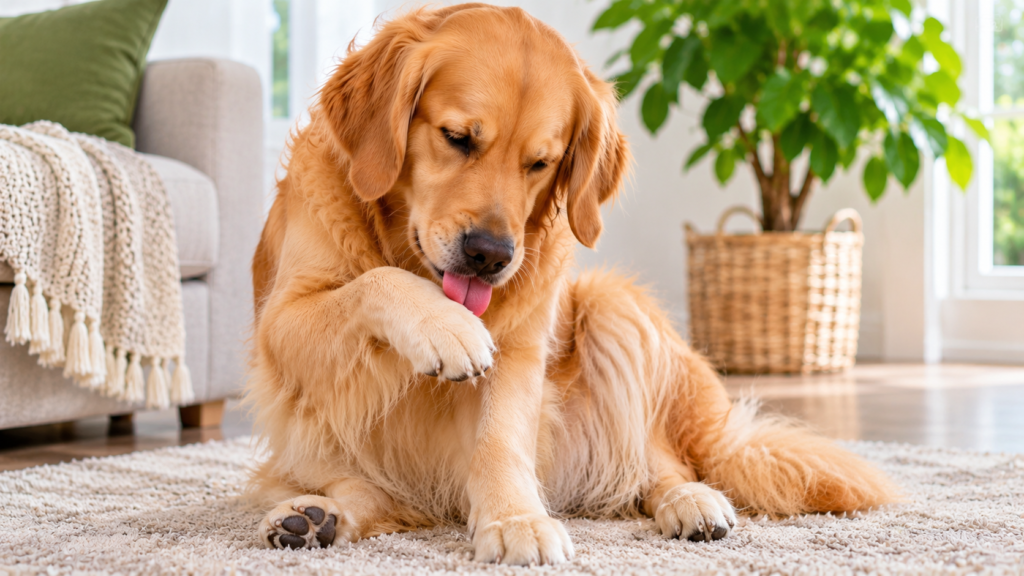
Noticing your dog licking their paws more often than usual? An occasional lick after a walk or meal is normal grooming. Repeated licking, chewing or nibbling can point to irritation, allergies, discomfort or another problem that deserves attention. Understanding when it happens and checking the paws carefully can help you decide what to do next.
Is It Normal for Dogs to Lick Their Paws?
Dogs use their tongues to clean themselves, so brief paw grooming is usually nothing to worry about. It becomes more concerning when licking is frequent, difficult to interrupt, focused on one paw, or accompanied by redness, swelling, odour, hair loss or limping. Persistent moisture from licking can also irritate the skin and make an existing problem worse.
Why Is My Dog Licking Its Paws?
1. Environmental or food allergies
Allergies can cause itchy skin, and paws are a common area for dogs to lick or chew. Environmental triggers may include pollen, grasses, dust mites or mould. Food allergy is another possibility, although paw licking alone cannot confirm it. A veterinarian can assess the pattern and advise whether a structured diet trial or other testing is appropriate.
2. Irritation after walks
Grass, mud, road salt, cleaning products, lawn treatments and hot or rough surfaces may irritate paw pads or the skin between toes. Check the paws after outdoor activity, especially if licking starts as soon as your dog comes indoors. Rinse off visible dirt with clean, lukewarm water and dry gently, including between the toes.
3. A cut, thorn or damaged nail
A small cut, splinter, grass seed, cracked pad or broken nail can make one paw painful. Compare all four paws in good light. Do not dig into the skin or try to remove an object that is deeply embedded. If there is bleeding, significant pain, swelling or a foreign body you cannot remove easily, contact your veterinarian.
4. Bacterial or yeast skin problems
Persistent licking creates a warm, damp environment that can encourage secondary skin problems. Redness, greasy skin, brown staining, discharge or an unusual smell may be clues. These signs are not enough to identify the organism, so avoid using leftover medication or human creams. A veterinarian may need to examine the skin and take a sample before choosing treatment.
5. Pain or joint discomfort
Some dogs lick near an area that hurts. A sore toe, arthritis or another musculoskeletal problem may lead to repeated attention to a paw or leg. Watch for stiffness, limping, reluctance to jump, or difficulty getting up. New or persistent pain should be assessed rather than treated as a simple grooming habit.
6. Stress, boredom or a learned habit
Some dogs lick when they are unsettled or have little to do, and the behaviour can become repetitive. However, it is important to rule out itch and pain before assuming the cause is emotional. A predictable routine, suitable enrichment and reward-based activities can support wellbeing, but they do not replace medical care when the skin is inflamed or painful.
How to Check Your Dog’s Paws at Home
Choose a calm moment and inspect each paw gently. Stop if your dog shows pain or becomes frightened. Look for:
- Redness, swelling or warmth around the toes
- Cracks, cuts, blisters or worn paw pads
- Thorns, burrs, stones or other debris between the toes
- Broken, split or overgrown nails
- Moist skin, discharge, unusual smell or discolouration
- Differences between the affected paw and the other paws
Take a clear photo if you notice a change. A short video of the licking or any limp can also help your veterinarian understand what is happening.
What You Can Do to Help
Clean and dry paws gently
After walks, rinse away dirt or possible surface irritants with clean lukewarm water and pat the paws dry. Avoid harsh disinfectants, essential oils and fragranced products unless your veterinarian recommends a specific product.
Reduce exposure to likely irritants
If licking follows walks on treated lawns or salted paths, choose a cleaner route where possible. Wash bedding regularly with a mild, fragrance-free detergent if your veterinarian suspects contact irritation. Make one practical change at a time and note whether the pattern changes.
Prevent further damage while arranging care
If your dog is damaging the skin by chewing, ask your veterinary clinic how to protect the area safely. A properly fitted recovery collar may be useful for some dogs, but it should not replace finding the cause. Check the paw regularly and keep the area clean and dry.
Keep a simple symptom diary
Record which paw is affected, when licking occurs, recent walks, changes in food or household products, and any other symptoms. This information can help your veterinarian look for patterns and decide what examination or tests are needed.
When Should You See a Veterinarian?
Arrange a veterinary appointment if licking is persistent, keeps returning, disrupts sleep, or causes red or broken skin. Seek prompt advice for limping, swelling, discharge, a bad smell, a damaged nail or suspected foreign material. Severe pain, uncontrolled bleeding, rapidly increasing swelling or an inability to bear weight warrants urgent veterinary attention.
Do not give human painkillers or apply human anti-itch creams without veterinary guidance. Some products can be harmful to dogs, particularly if licked off. Treatment depends on the cause, which may require examination and targeted medication or allergy management.
Frequently Asked Questions
Why does my dog lick only one paw?
Licking one paw can suggest a local issue such as a cut, splinter, sore nail or painful joint. Check gently for visible changes and contact your veterinarian if the behaviour continues or your dog seems uncomfortable.
Should I stop my dog from licking its paws?
Brief grooming is normal, but repeated licking that irritates the skin should be addressed. Interrupt gently if needed to prevent damage, then investigate the underlying cause with veterinary advice rather than relying only on a barrier or deterrent.
Can I use coconut oil or human lotion on my dog’s paws?
Do not assume household oils or human lotions are suitable. Dogs may lick them off, and some ingredients can irritate skin or be unsafe if swallowed. Ask your veterinarian before applying a product, especially to inflamed or broken skin.
Do allergies always cause paw licking?
No. Paw licking has several possible causes, including injury, irritation, infection and pain. Allergies are one possibility, but a veterinarian needs to consider the full history and examination before diagnosing them.
Help Your Dog Feel Comfortable on Their Paws
Occasional paw grooming is normal, but frequent licking is a useful signal to pay attention. Check for visible irritation, gently clean and dry the paws after walks, and keep track of when the behaviour occurs. If it persists or comes with pain, redness or swelling, arrange a veterinary assessment so the cause can be treated appropriately.
Disclaimer: This article is for general educational purposes and does not replace a veterinary examination, diagnosis or treatment plan.