
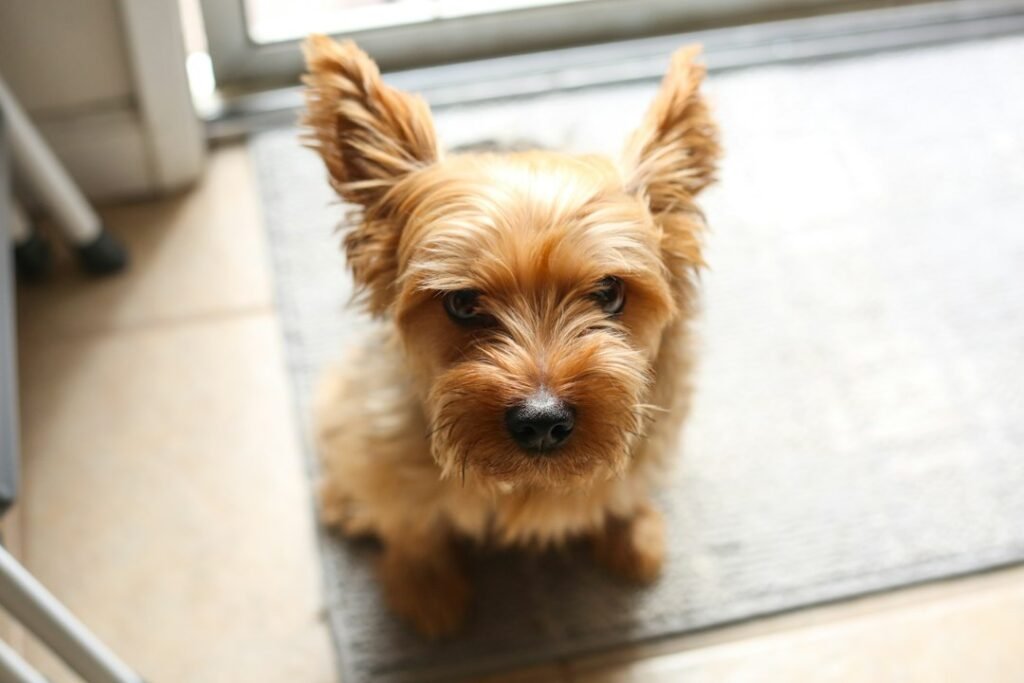
When a puppy gets excited by visitors, the doorbell, or people entering the room, barking and jumping can quickly become a habit. The goal is not to punish excitement but to teach your puppy a predictable alternative: move to a safe spot, settle, and earn rewards for calm behavior. Progress takes practice, and young dogs need realistic expectations.
Why puppies get overexcited when guests arrive
Visitors bring movement, voices, new smells, and attention. Puppies may jump because they want to greet people, bark because they are unsure, or run around because they have not learned how to settle in stimulating situations. Tiredness, too much excitement, and inconsistent greetings can make the behavior harder to manage.
Start training when your puppy is comfortable and the house is quiet. If your puppy is frightened, growling, snapping, or unable to recover from excitement, give them distance and consider advice from a qualified reward-based trainer or your veterinarian.
1. Teach a simple “go to your mat” cue
Choose a non-slip mat or dog bed placed away from the front door. Toss a treat onto it and let your puppy step on voluntarily. Mark the moment their paws touch the mat with a cheerful “yes,” then reward them. Repeat several times in short sessions.
Once your puppy happily goes to the mat, add a cue such as “mat.” Reward standing on it, then sitting or lying down. Build duration gradually—one or two seconds at first, then a little longer. Release your puppy with a consistent word such as “free.” Avoid forcing them onto the bed.
2. Reward calm behavior before excitement builds
Keep small treats nearby and notice quiet moments: four paws on the floor, looking at you, sitting, or lying down. Reward these behaviors before your puppy starts jumping. If you only respond after barking or leaping, your puppy may learn that big reactions get attention.
Use a calm voice and deliver the treat low, near the puppy’s nose or on the mat. Keep sessions short enough that your puppy can succeed.
3. Practise with a pretend doorbell
Record a doorbell sound at a low volume or ask a family member to gently knock. Immediately give your puppy a treat, then pause. Repeat at a level where your puppy can still eat and respond to you. Increase the volume or realism slowly over multiple sessions.
If your puppy barks continuously or looks worried, make the sound quieter or increase the distance. The aim is to help the sound predict something positive, not to overwhelm your dog.
4. Rehearse visitor greetings in small steps
- Start with one familiar, calm helper rather than a busy group.
- Have your puppy on a comfortable harness and lead if needed, with enough space to move away.
- Ask the visitor to ignore jumping: no eye contact, touching, or excited talking while paws are up.
- Reward your puppy for keeping four paws on the floor or settling on the mat.
- Allow a brief greeting only when your puppy is calm, then pause before excitement rises again.
Do not ask visitors to approach or touch a puppy who is backing away, hiding, stiffening, or showing other signs of fear. Give the puppy a quiet retreat and let them choose whether to approach.
5. Manage the environment while your puppy learns
Training works best when the puppy is not repeatedly practising the unwanted behavior. Use a baby gate, a quiet room, or a pen with water and a comfortable bed when you cannot supervise. Give your puppy a suitable chew or food puzzle before expected visitors arrive, and make sure they have had a toilet break and age-appropriate activity.
Management is not a failure. It prevents overwhelming situations while you build the skill gradually. For more foundation skills, read our guides to teaching a puppy to settle on a mat and teaching a reliable recall.
Common mistakes to avoid
- Repeating “sit” or “quiet” many times without rewarding the behavior you want.
- Shouting, leash-jerking, or using frightening corrections, which can increase stress and confusion.
- Expecting a young puppy to stay settled through a long party without breaks.
- Allowing every visitor to encourage jumping, then expecting the puppy to stop on cue.
- Increasing difficulty too quickly instead of practising in easy, controlled steps.
How long does it take?
Some puppies begin to understand the routine within a few short sessions, but reliable behavior around real visitors usually takes repeated practice over weeks. Progress depends on age, temperament, previous experiences, and how consistently everyone follows the same plan. Measure success in small steps, such as recovering faster or jumping less often.
Frequently asked questions
Should I let guests give my puppy treats?
Yes, if your puppy is comfortable with them. Ask guests to toss treats onto the mat or reward four paws on the floor rather than luring the puppy into jumping distance. Avoid hand-feeding if the puppy is mouthy or overly excited.
What if my puppy barks at every visitor?
Increase distance from the door, use a gate or quiet room, and reward calm responses to low-intensity sounds. If barking appears fear-based or escalates, seek help from a qualified reward-based trainer or veterinary professional.
Should I crate my puppy when people visit?
A crate can be an option only if your puppy has been positively introduced to it and can relax there. Never use it as punishment. A pen, baby gate, or quiet room may be more suitable for some puppies.
Key takeaway
Teach a mat cue, reward calm choices, practise door sounds gradually, and arrange visitor greetings so your puppy can succeed. Short, positive repetitions and consistent management are more effective than expecting a puppy to figure it out during a busy arrival.
Training note: This article offers general dog-training guidance. For persistent fear, aggression, or safety concerns, consult a qualified reward-based trainer and your veterinarian.